The Tale of the Tape
The SEC is once again the deepest conference in College Football. With Texas and Georgia leading a loaded group of contenders, there is very little separating much of the conference behind them. LSU, Tennessee, Oklahoma, Ole Miss and Alabama all have the talent to compete near the top. Texas A&M has big expectations, but I’m forecasting a step back because of my distrust for QB Marcel Reed.
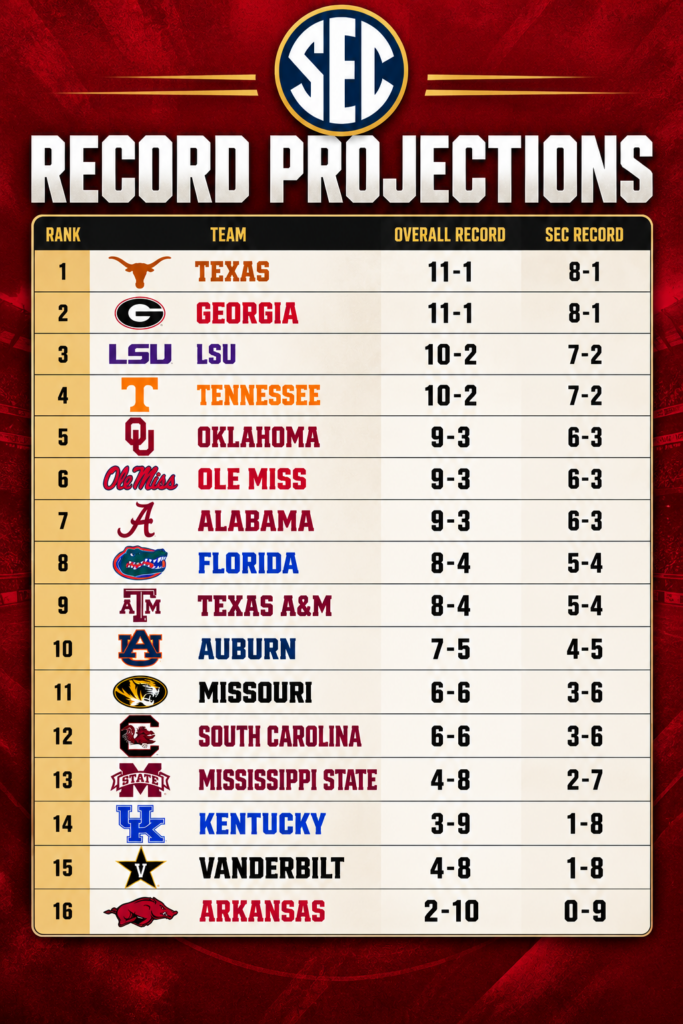
All in all, I see nine SEC teams capable of making a CFP push. Texas and Georgia feel the most trustworthy, but teams three through nine in my standings all have significant upside and can make the playoff if all goes right.
Texas Longhorns
Offensive Outlook
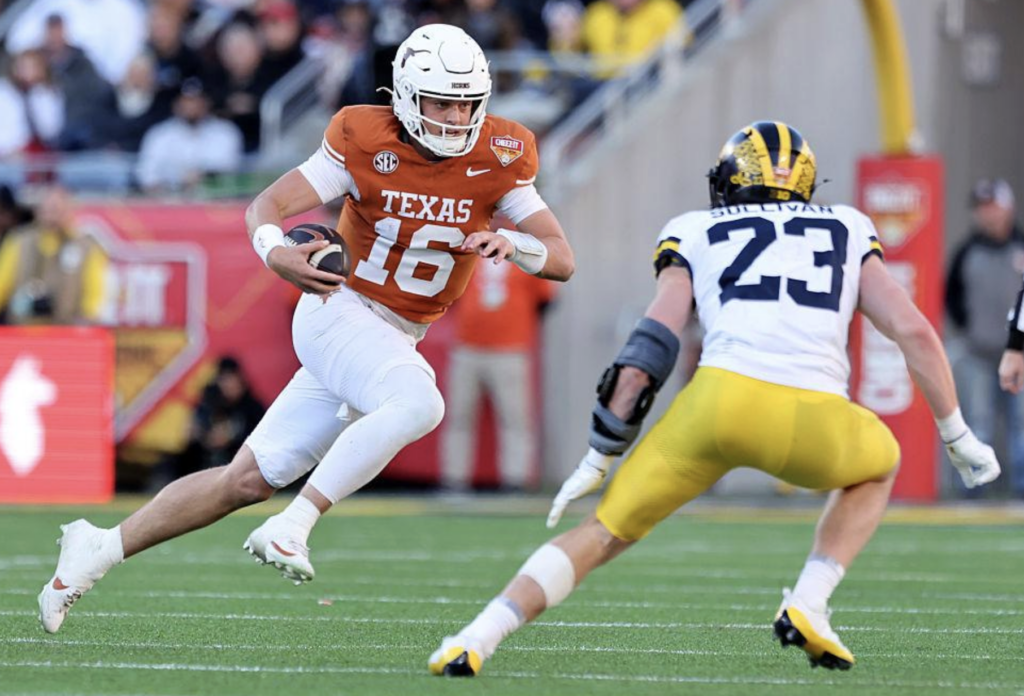
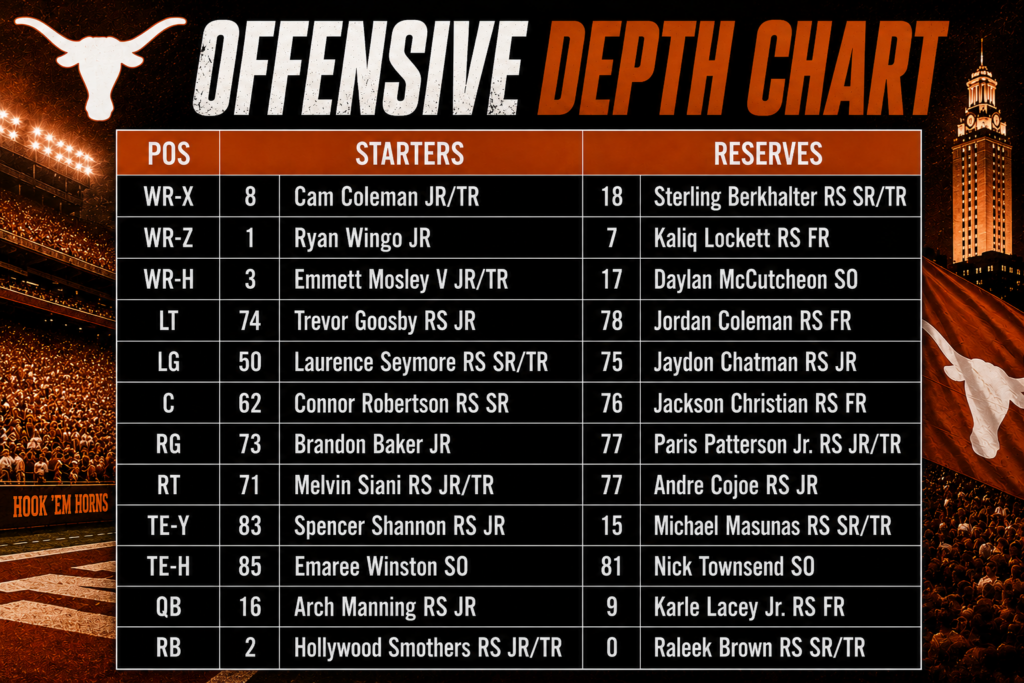
Texas enters 2026 with one of the most complete offenses in college football, beginning with Arch Manning. In his first full season as the starter, Manning completed 248 of 404 passes for 3,163 yards, 26 touchdowns and seven interceptions, while adding 399 rushing yards and a team-high 10 rushing touchdowns. More importantly, he improved considerably as the season progressed, accounting for 20 total touchdowns over his final six games and finishing with 376 total yards and four touchdowns against Michigan in the Citrus Bowl. He’s a legitimate Heisman candidate entering 2026.
His supporting cast is outstanding. Ryan Wingo returns after catching 54 passes for 834 yards and seven touchdowns, and Texas added former Auburn star Cam Coleman, who produced 708 yards and five touchdowns last season. Wingo and Coleman have the potential to become one of the best receiving duos in the country, with Emmett Mosley V, Kaliq Lockett and Sterling Berkhalter providing additional depth.
Sarkisian also completely reloaded the backfield. Arizona State transfer Raleek Brown rushed for 1,141 yards at 6.1 yards per carry last season, while NC State transfer Hollywood Smothers added 939 yards at 5.9 per carry. That’s more than 2,000 yards of proven rushing production joining an offense that already has Manning as a running threat.
Up front, Trevor Goosby and Brandon Baker give Texas experienced starters at both tackle spots after each started all 13 games last season. There are some interior-line questions, but I trust Sarkisian to work around them. With Manning entering his second full season, two outstanding receivers and a dramatically upgraded backfield, Texas has everything necessary to field one of the nation’s best offenses.
Defensive Outlook
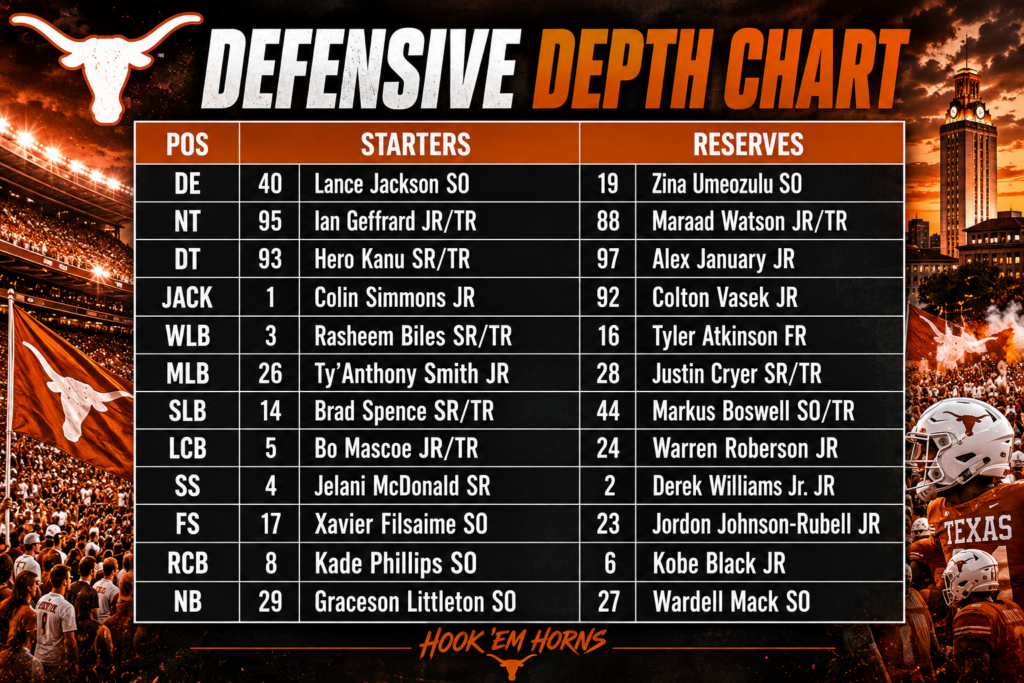
The biggest offseason change came at defensive coordinator, where Will Muschamp returned to Austin after previously coordinating the Longhorn defense from 2008–10. I like the fit because Muschamp inherits the kind of athletic roster that allows him to be aggressive rather than protecting personnel deficiencies.
The centerpiece is Colin Simmons, who recorded 15.5 tackles for loss and an SEC-leading 12 sacks last season. He’s one of the premier edge defenders in college football and gives Texas the ability to create pressure without constantly blitzing. The Longhorns then made the front seven even more dangerous by adding Pitt transfer Rasheem Biles, who recorded 101 tackles and 17 tackles for loss in 2025, leading the nation at 1.70 TFL per game.
Safety Jelani McDonald gives Muschamp another versatile weapon after leading Texas with 80 tackles and three interceptions last season. Derek Williams Jr. and Kobe Black provide additional experience in the secondary, giving Texas established talent at every level.
There may be an adjustment period under Muschamp, but the ceiling is extremely high. Simmons provides elite pass rush, Biles provides disruptive linebacker play and McDonald anchors the back end. Texas doesn’t need this defense to carry the team; if Muschamp simply maximizes the talent already available, it should complement the offense well enough to contend for a championship.
Overview and Projection
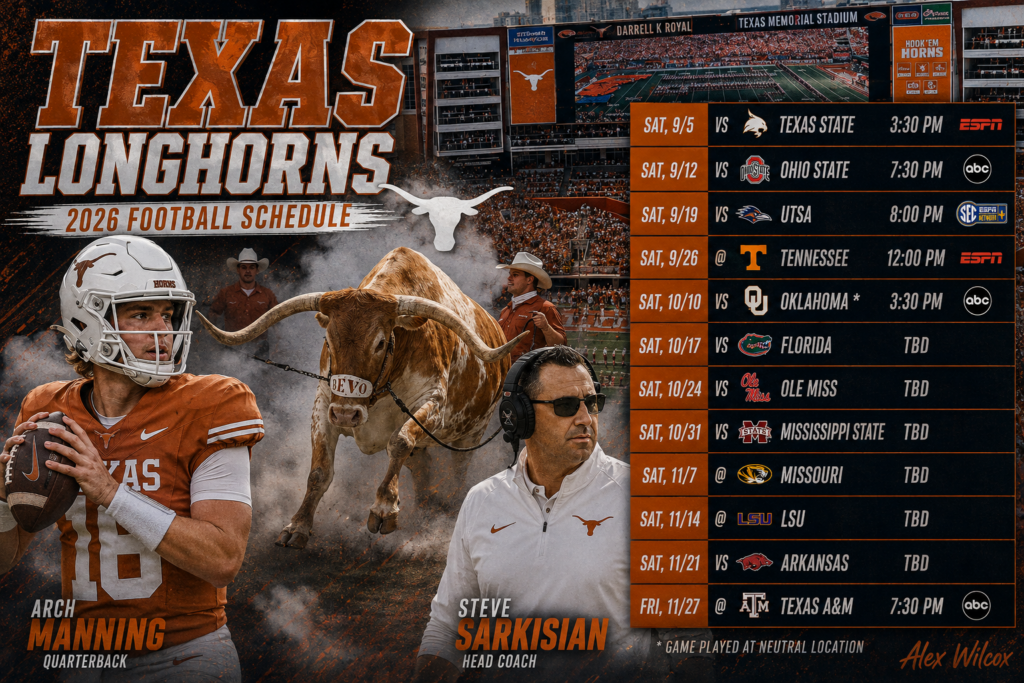
I have Texas finishing 11–1 overall and 8–1 in SEC play. There are enough difficult games that I don’t expect an undefeated season, but I also don’t see many weaknesses capable of producing multiple losses. Manning is now an experienced starter, Wingo and Coleman give him elite perimeter talent, the portal transformed the running back room, and Simmons headlines a defense loaded with NFL-caliber athletes.
The pressure now shifts to actually finishing the job. Sarkisian has assembled the roster, and Manning has progressed from highly touted prospect to proven SEC quarterback. Texas enters 2026 with a legitimate national-championship roster, and I expect the Longhorns to play like one.
Projected Record: 11-1 (8-1)
Georgia Bulldogs
Offensive Outlook
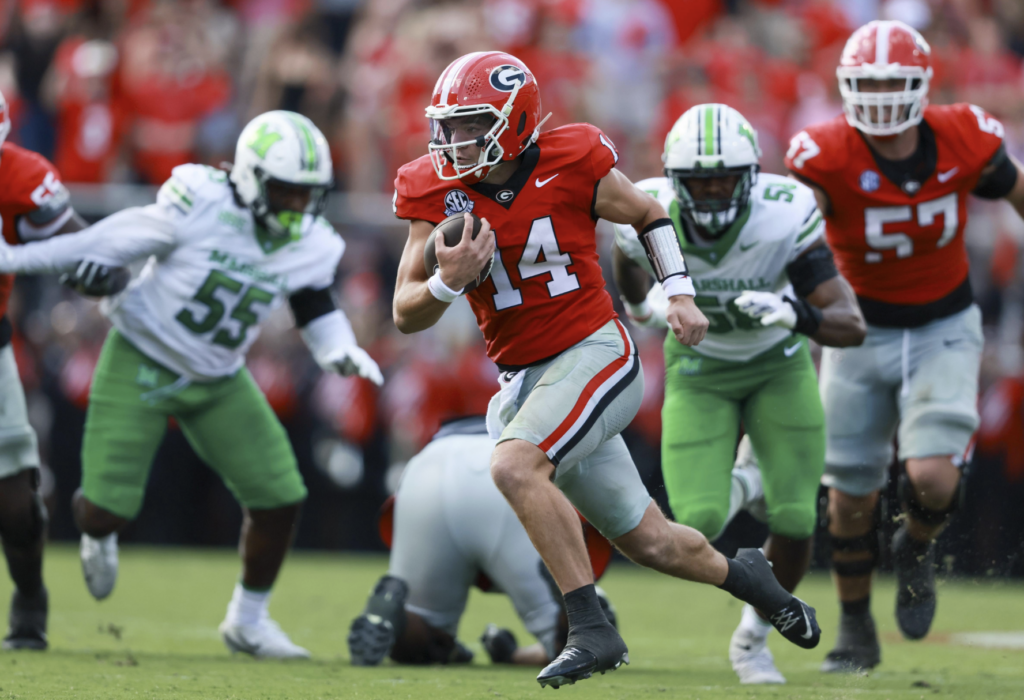
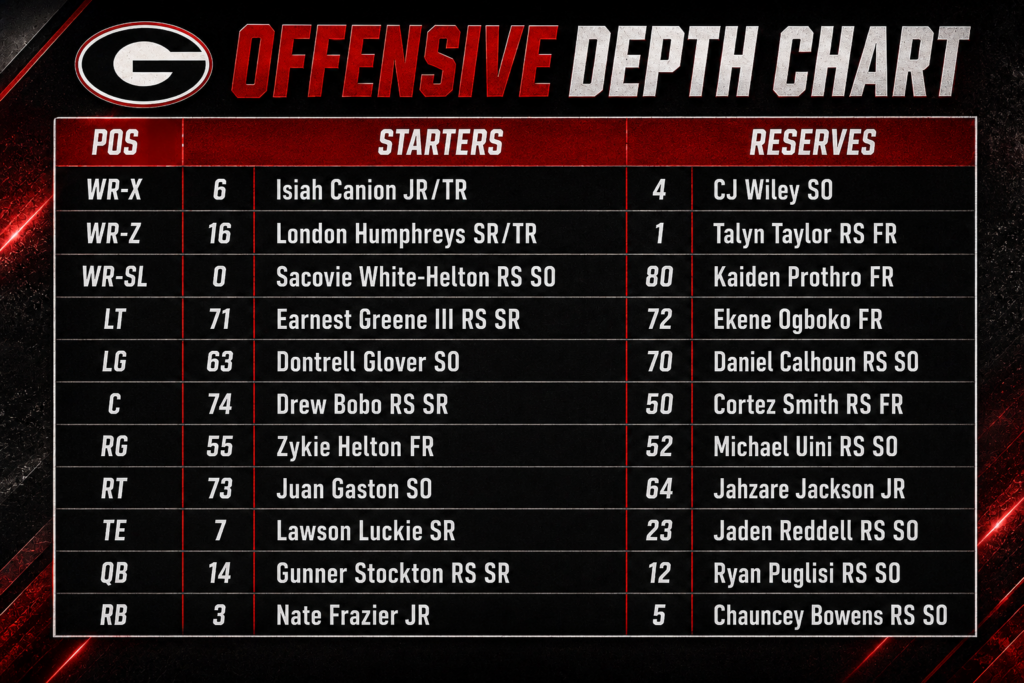
Georgia enters 2026 in a familiar position: good enough to win the national championship, but with a few offensive questions that will determine whether it actually does. The biggest advantage is quarterback continuity. Gunner Stockton returns after leading Georgia to a 12–2 season, another SEC championship and a College Football Playoff quarterfinal appearance. Georgia’s season ended with a 39–34 loss to Ole Miss in the Sugar Bowl, but Stockton’s first full year as the starter gave the Bulldogs an established quarterback around whom they can build. He may not have Arch Manning’s physical ceiling or Trinidad Chambliss’ grade in our system, but he’s tough, mobile and experienced in high-pressure games.
Nate Frazier returns alongside him after establishing himself as Georgia’s lead back, giving Mike Bobo a proven foundation for a physical rushing attack. The offensive line should remain a major strength as well, with Earnest Greene III and Drew Bobo both earning preseason first-team All-SEC recognition.
The concern is receiver turnover. Georgia lost six of its seven leading receivers from 2025, leaving this as the offense’s clearest question entering the season. Players such as Talyn Taylor, Isiah Canion and Sacovie White-Helton now have opportunities to take much larger roles, while stud tight end Lawson Luckie provides experience in the middle of the field.
Ultimately, I trust Georgia’s infrastructure. Stockton doesn’t need to carry the offense by himself, and the Bulldogs should once again be physical enough up front to establish the run. The receiving corps may keep this from being the most explosive offense in the SEC, but Stockton’s experience, Frazier and a strong offensive line give Georgia a very high floor.
Defensive Outlook
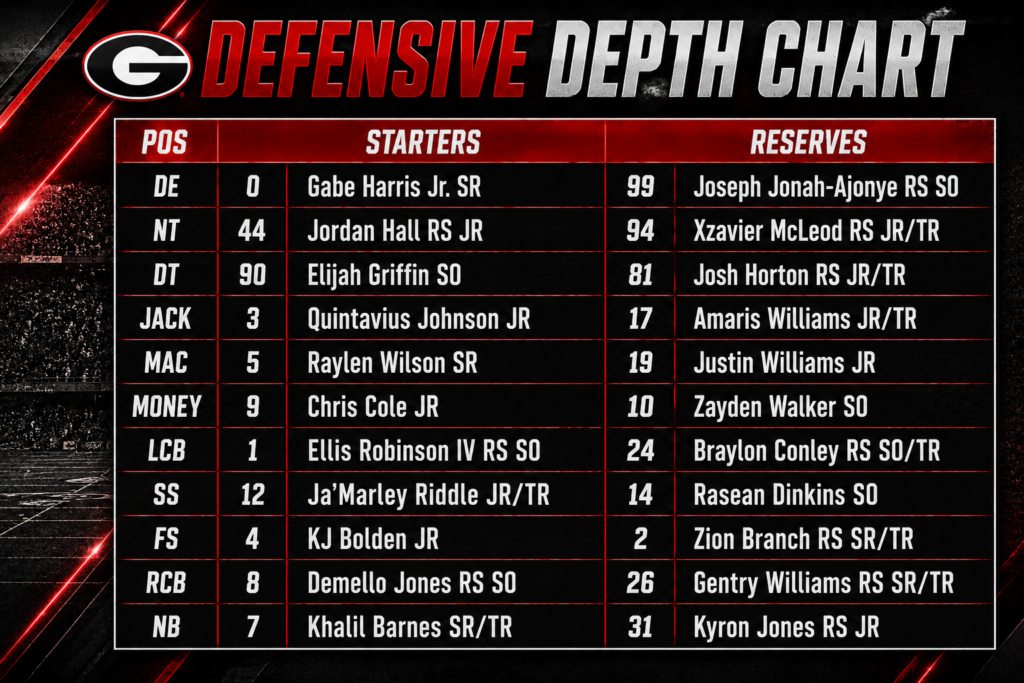
The Bulldogs finished 2025 ranked fourth nationally in rushing defense at 81.5 yards allowed per game, 10th in scoring defense at 17.7 points per game and 14th in total defense at 298 yards per game. Kirby Smart and Glenn Schumann now bring back another defense loaded with blue-chip talent, particularly at linebacker and in the secondary.
KJ Bolden is my favorite player on the roster. He recorded 76 tackles and two interceptions last season while earning second-team All-America recognition. Alongside him is Ellis Robinson IV, the 2025 FWAA Freshman Defensive Player of the Year and a second-team All-SEC selection. Both enter 2026 as preseason first-team All-SEC defenders. That gives Georgia one of the best secondary foundations in the country.
The linebacker group may be just as impressive. Chris Cole and Raylen Wilson give Schumann speed and athleticism in the middle, while Gabe Harris Jr. provides an experienced 260-pound presence on the edge. PFF ranks Georgia’s linebacker unit third nationally and its secondary inside the top five entering the season.
There are always NFL departures at Georgia, particularly along the defensive front, but at this point Smart has earned considerable benefit of the doubt. Georgia doesn’t rebuild defensively—it replaces elite players with another wave of elite recruits. With Bolden and Robinson on the back end and tremendous athleticism at linebacker, I expect this to again be one of the country’s best defenses.
Overview and Projection
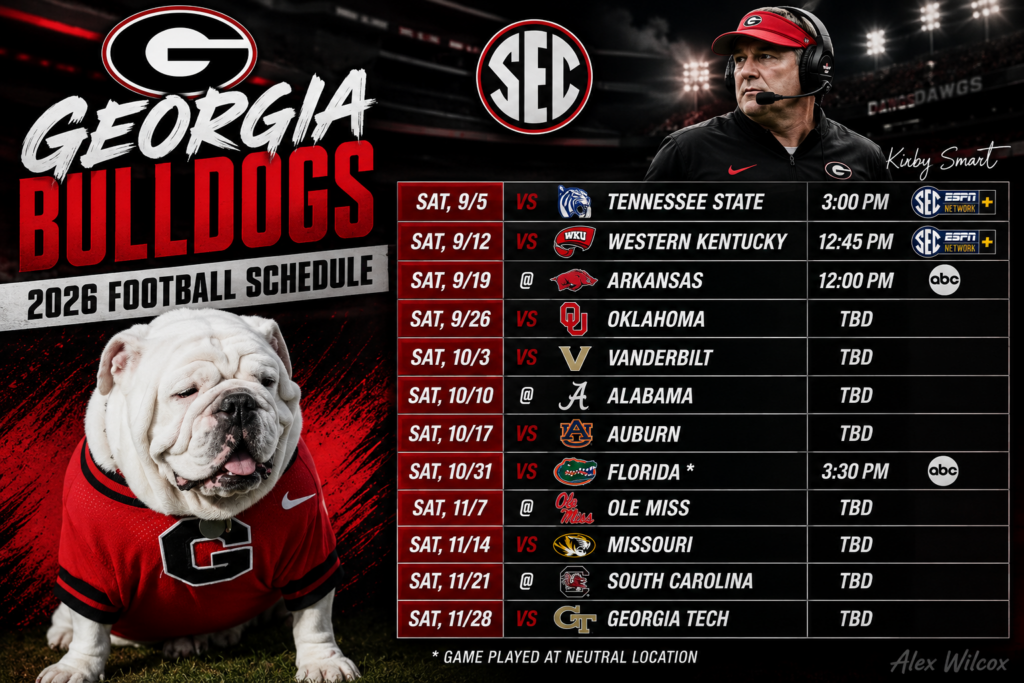
I have Georgia finishing 11–1 overall and 8–1 in the SEC. Stockton gives Georgia quarterback stability, the offensive line should remain excellent, and the defense has legitimate national-championship talent.
The biggest question is whether Georgia can develop enough explosiveness at receiver to complement everything else it does well. If it can, there is very little separating this team from Texas—or anyone else in the country. Georgia isn’t merely an SEC contender in 2026. It’s once again one of the teams most capable of winning the entire thing.
Projected Record: 11-1 (8-1)
LSU Tigers
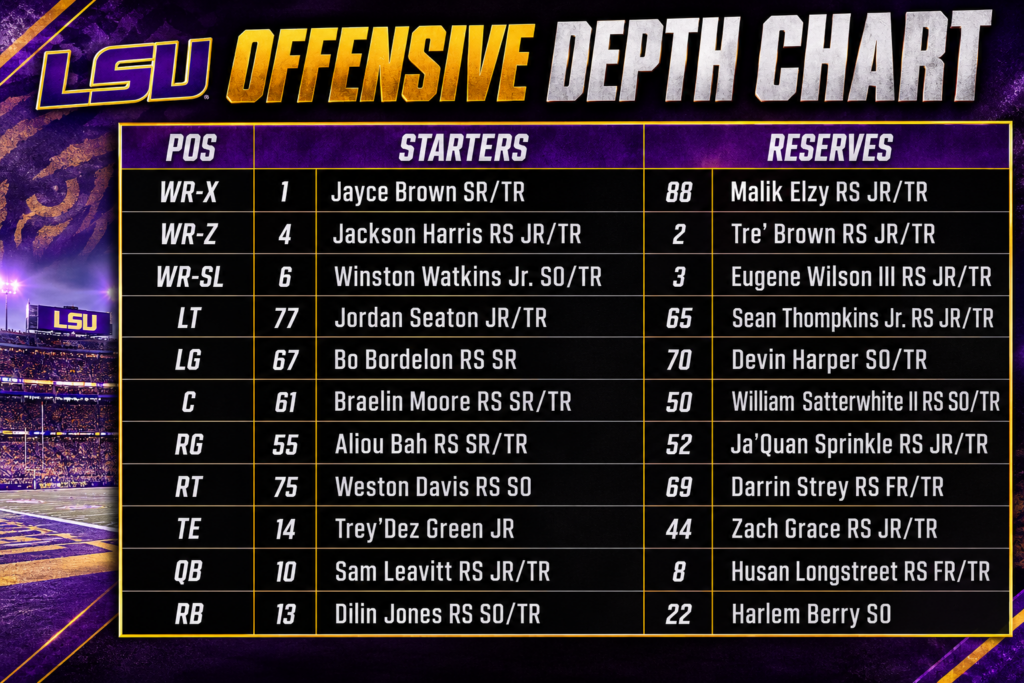
Offensive Outlook
LSU begins a new era under Lane Kiffin, and there may not be a coach in the country better suited to fixing what went wrong offensively last season. The Tigers averaged only 22.8 points and 333.5 yards per game in 2025, including just 104 rushing yards per game. Kiffin brings offensive coordinator Charlie Weis Jr. with him from Ole Miss after the Rebels led the SEC with 498 yards per game last season.
The centerpiece of the rebuild is Arizona State transfer Sam Leavitt. Leavitt gives Kiffin the mobility and off-script ability that fits extremely well in this offense, and LSU also added USC transfer Husan Longstreet to strengthen the quarterback room. The Tigers attacked the portal aggressively overall, finishing with the nation’s top-rated transfer class according to LSU’s preseason release.
Kiffin also inherits an excellent backfield. Harlem Berry and Caden Durham form one of the SEC’s most talented running back combinations, while 6-foot-7 tight end Trey’Dez Green returns after catching 33 passes for 433 yards and a team-high seven touchdowns last season. The receiving corps has been rebuilt with transfers including Jayce Brown, Eugene Wilson III and Tre’ Brown, giving Kiffin plenty of pieces to experiment with.
The offensive line received perhaps the biggest portal addition of all in former Colorado tackle Jordan Seaton, whom LSU identified as the No. 1 tackle available in the portal. LSU’s offensive talent was better than its production indicated last year, and adding Kiffin, Leavitt and Seaton dramatically raises the ceiling. I expect this to be one of the SEC’s best offenses.
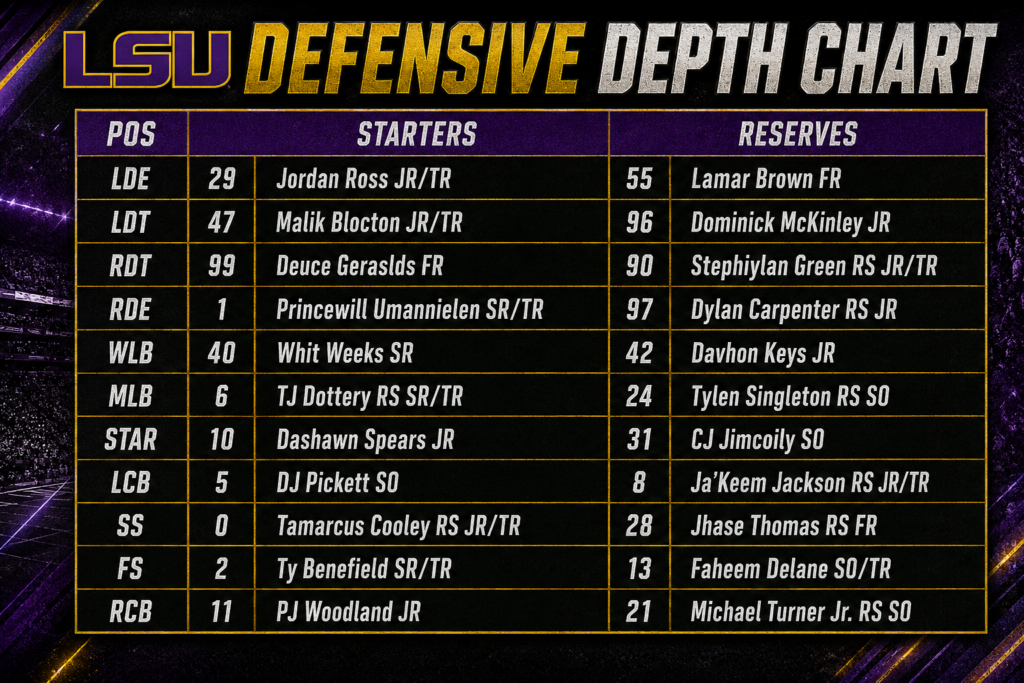
Defensive Outlook
LSU’s defense was much better than the offense in 2025, allowing 19.8 points and 328.7 yards per game. The Tigers also intercepted 17 passes while allowing only 14 passing touchdowns, and now Kiffin has supplemented that returning talent with several major portal additions.
Whit Weeks remains the leader in the middle and enters the year as a preseason first-team All-SEC linebacker. LSU also landed former Ole Miss edge defender Princewill Umanmielen, one of the most coveted defensive players in the portal and another preseason first-team All-SEC selection. Former Ole Miss linebacker TJ Dottery joins him in Baton Rouge, giving LSU considerably more proven experience in the front seven.
The secondary could become a major strength. Sophomore DJ Pickett is already developing into one of the conference’s best corners after recording three interceptions and earning Freshman All-America honors in 2025. LSU also returns PJ Woodland and added Boise State safety Ty Benefield and Ohio State transfer Faheem Delane. Pickett and Benefield were both selected preseason second-team All-SEC.
There are a lot of new pieces throughout this roster, so LSU may take some time to completely come together. But the defensive talent is substantially better than what Kiffin typically had available at Ole Miss. Weeks, Umanmielen and Pickett give LSU a potential star at every level of the defense, which makes this a unit with top-20 national upside.
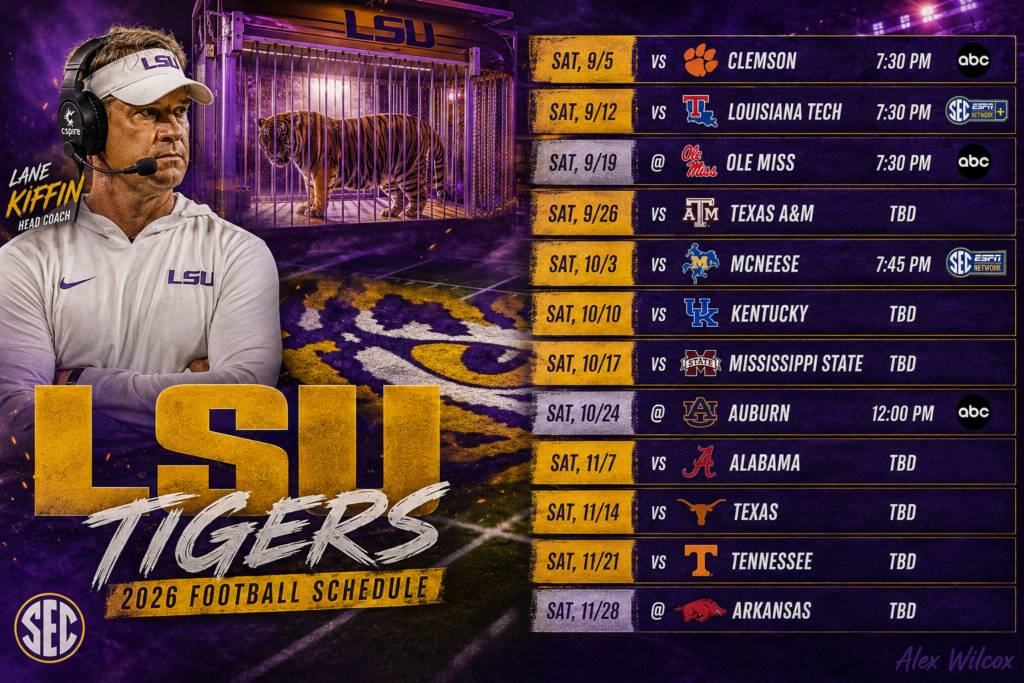
Overview and Projection
This roster has far more upside than a typical team coming off seven wins. Leavitt is a major quarterback addition, Kiffin should immediately improve the offense, Berry and Durham give LSU a dangerous backfield, and the defense has high-end players in Weeks, Umanmielen and Pickett.
That’s why I’m comfortable making LSU one of my bigger preseason risers. I have the Tigers jumping from 7–6 to 10–2 and 7–2 in SEC play. There will probably be an adjustment somewhere during Kiffin’s first season, but LSU has enough talent to contend immediately. If Leavitt thrives in Kiffin’s system as I expect, LSU could go from one of 2025’s biggest disappointments to a legitimate SEC and College Football Playoff contender in a single offseason.
Projected Record: 10-2 (7-2)
Tennessee Volunteers
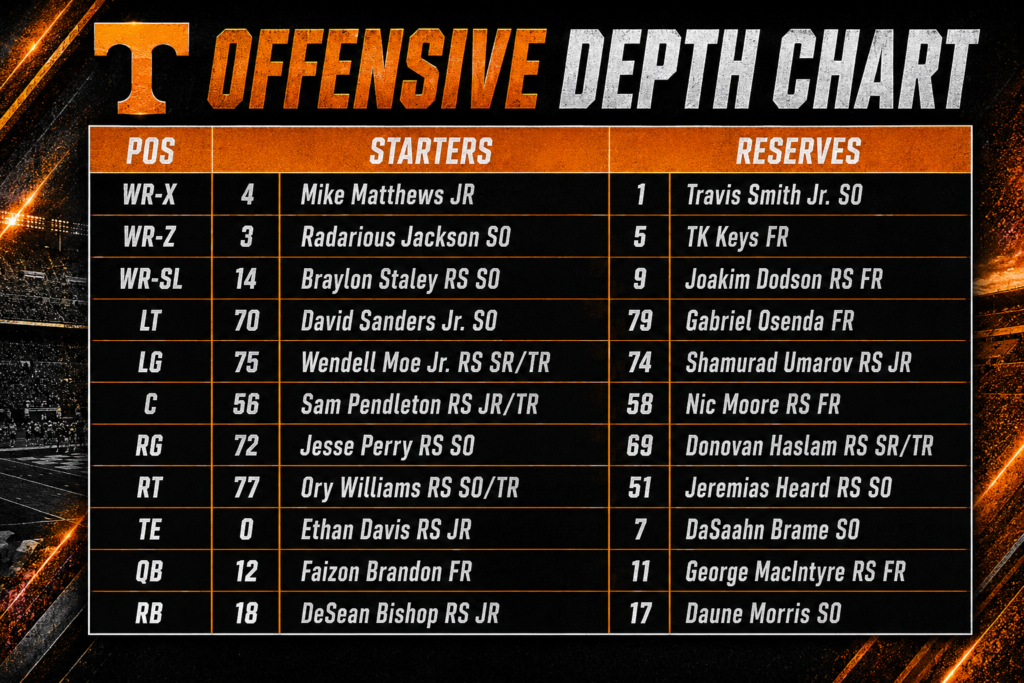
Offensive Outlook
Tennessee enters 2026 with one of the most fascinating quarterback situations in the SEC. True freshman Faizon Brandon officially won the starting job in August, immediately putting one of the nation’s most talented young quarterbacks in charge of Josh Heupel’s offense. Brandon was a five-star prospect who went 35–1 as a high school starter, completing more than 72% of his career passes for 6,374 yards and 79 touchdowns while adding 1,261 rushing yards and 21 scores.
Fortunately, Tennessee won’t need Brandon to immediately carry the offense. DeSean Bishop returns after rushing for 1,076 yards and 16 touchdowns in 2025, making him Tennessee’s first returning 1,000-yard rusher in a decade. The Vols also return three of their top four pass catchers in Braylon Staley, Mike Matthews and Ethan Davis, giving Brandon considerably more established talent around him than most true freshman quarterbacks.
The offensive line could be one of Tennessee’s biggest strengths. The group entered camp with 86 combined career starts, headlined by veteran guard Wendell Moe Jr. and former five-star tackle David Sanders Jr. Moe has 38 career starts and has surrendered only two sacks across more than 2,400 offensive snaps, while Sanders earned Freshman All-America honors last season.
There will inevitably be freshman moments from Brandon, particularly against this schedule. But his combination of arm talent and mobility fits Heupel’s system extremely well. With Bishop beside him, experienced receivers and a veteran offensive line, Tennessee has constructed about as favorable an environment as possible for a freshman quarterback. If Brandon is as good as I think he can be, this offense has a very high ceiling.
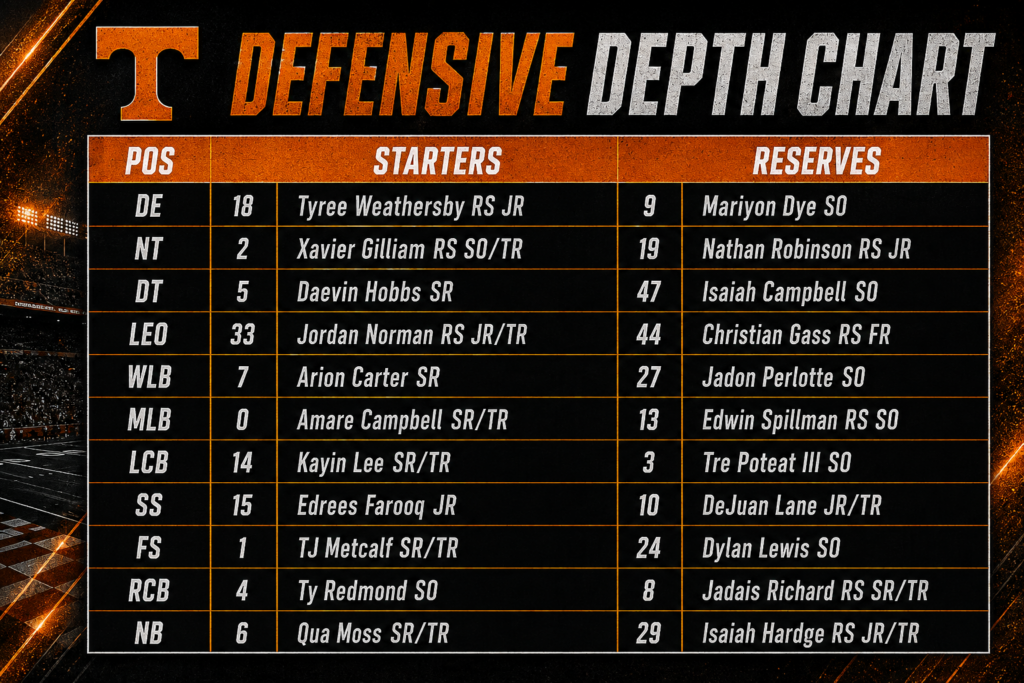
Defensive Outlook
Tennessee made one of the biggest coordinator hires of the offseason by bringing in Jim Knowles to run the defense. Knowles has coordinated defenses at Penn State, Ohio State and Oklahoma State and arrived in Knoxville with several assistants familiar with his system. Tennessee also added 22 portal transfers as part of a 46-player newcomer class, giving Knowles plenty of new personnel to work with.
The green dot is linebacker Arion Carter, who led the SEC with 7.6 tackles per game last season despite battling a foot injury. He finished with 76 tackles, six tackles for loss and 1.5 sacks and decided to return rather than enter the NFL Draft. Tennessee also added Penn State linebacker Amare Campbell, while Edwin Spillman and Jeremiah Telander give Knowles additional options at a position that could become the strength of this defense.
The secondary is equally intriguing. Ty Redmond led the SEC with 15 passes defended and 12 pass breakups in 2025 while intercepting three passes, and his 81.6 PFF coverage grade is the best among returning SEC corners. Tennessee supplemented him with experienced transfers Kayin Lee, TJ Metcalf and Qua Moss, providing Knowles with significantly more flexibility on the back end.
There are enough new pieces that some early adjustment should be expected, but I really like the combination of personnel and coaching. Knowles is an excellent defensive coordinator, Carter gives him an established leader in the middle and Redmond gives Tennessee a legitimate No. 1 corner. This defense has the potential to be considerably better by November than it is in September.
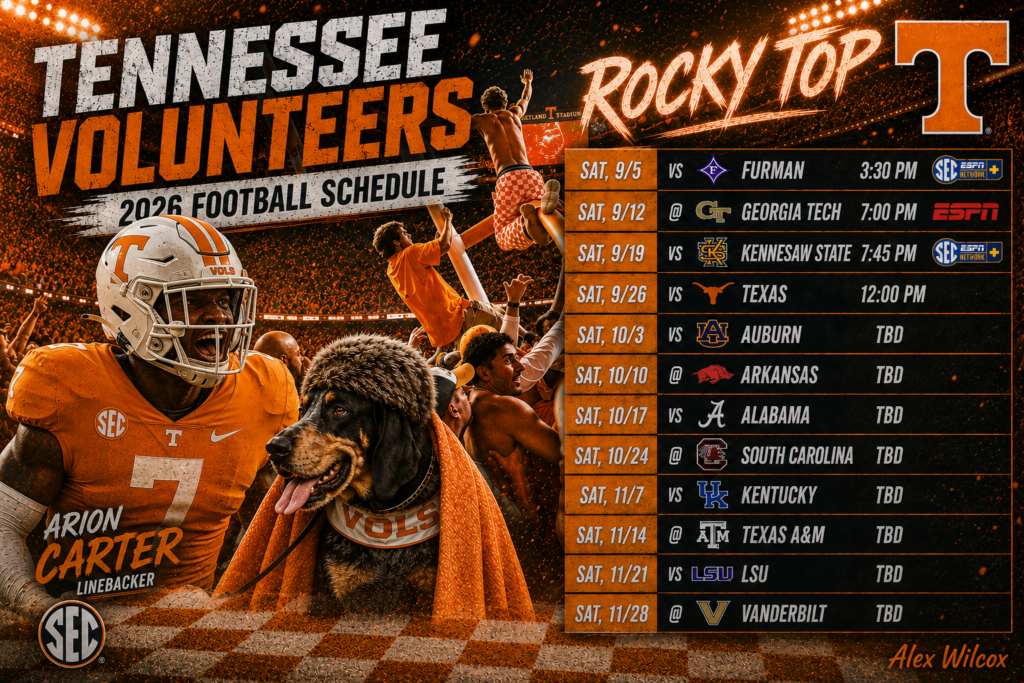
Overview and Projection
There will probably be a game or two where Faizon Brandon’s youth costs Tennessee. That’s simply the risk of projecting a true freshman quarterback to lead a team through the SEC. But the Vols don’t need him to be a finished product immediately. Bishop and the offensive line can carry some of the burden early, while the defense has enough veteran talent to keep Tennessee in games.
I have the Volunteers finishing 10–2 overall and 7–2 in the SEC. That’s a bullish projection for a team starting a true freshman quarterback, but I’m buying the talent around him, Heupel’s ability to develop quarterbacks and the impact Knowles can have defensively. If Faizon Brandon develops quickly, Tennessee isn’t merely a dangerous SEC team—it has a legitimate path to the College Football Playoff.
Projected Record: 10-2 (7-2)
Oklahoma Sooners
Offensive Outlook
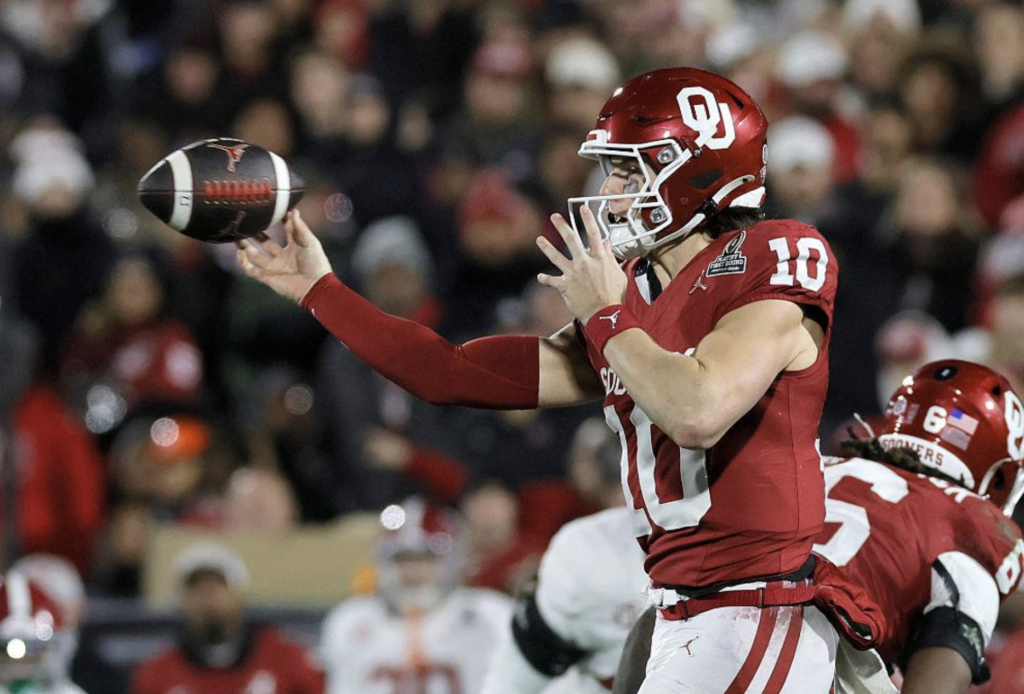
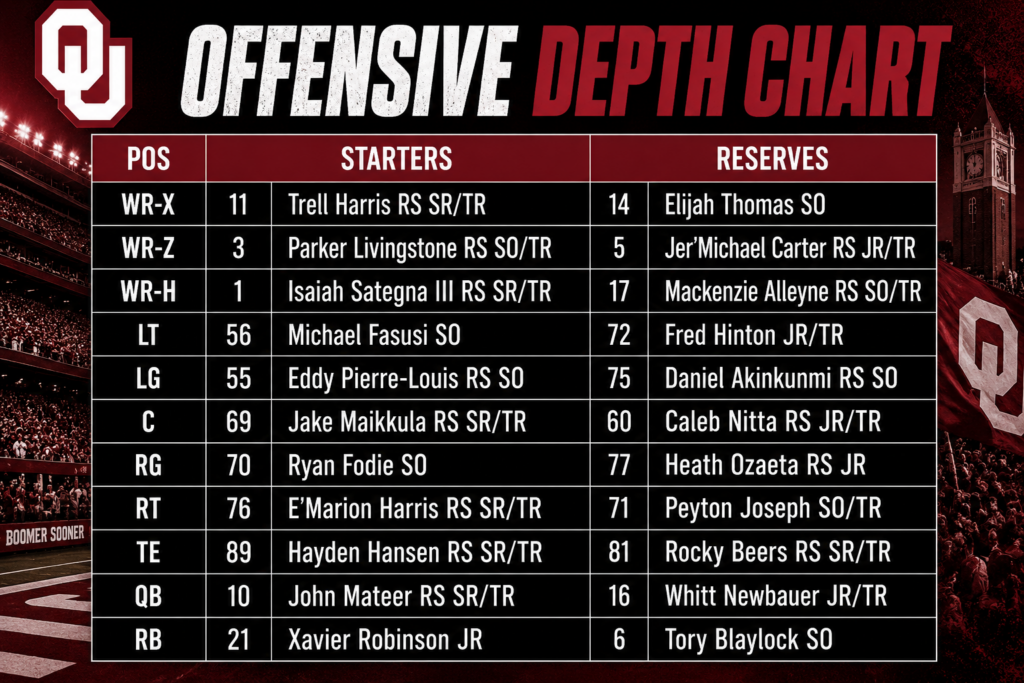
Oklahoma enters 2026 with a fascinating question at quarterback: which version of John Mateer are the Sooners going to get? Mateer completed 62.2% of his passes for 2,885 yards, 14 touchdowns and 11 interceptions last season while adding 431 rushing yards and eight touchdowns. Those numbers don’t fully tell the story. Mateer was playing very well before suffering a throwing-hand injury, but his performance declined considerably afterward.
His best returning weapon is Isaiah Sategna III, who caught 68 passes for 965 yards and eight touchdowns, finishing second in the SEC in receptions and third in receiving yards. Oklahoma also added an intriguing piece from rival Texas in Parker Livingstone, giving Mateer another big-bodied target alongside Sategna. The Sooners don’t lack skill talent; the bigger issue is whether they can generate more consistency around their quarterback.
The offensive line is where I need to see the biggest improvement. Michael Fasusi is an excellent building block after starting 10 games at left tackle as a true freshman and earning Freshman All-America recognition. But Mateer spent too much of last season dealing with pressure, and Oklahoma’s offense never developed the consistency necessary to complement its elite defense.
If Mateer stays healthy and the protection improves, I expect a noticeable step forward. He’s an excellent runner, has already produced a 3,000-yard passing season during his career and gives Oklahoma a playmaking element that can compensate when a play breaks down. The Sooners don’t need a top-five offense to contend. They simply need this unit to stop putting so much pressure on the defense.
Defensive Outlook
This is the reason I’m so high on Oklahoma.
The Sooners allowed just 15.5 points and 272.5 yards per game in 2025, ranking seventh and sixth nationally, respectively. Even more impressively, Oklahoma led the country in both tackles for loss per game (9.4) and sacks per game (3.5) with Brent Venables calling the defense. This wasn’t merely a good defense—it was one of the most disruptive units in college football.
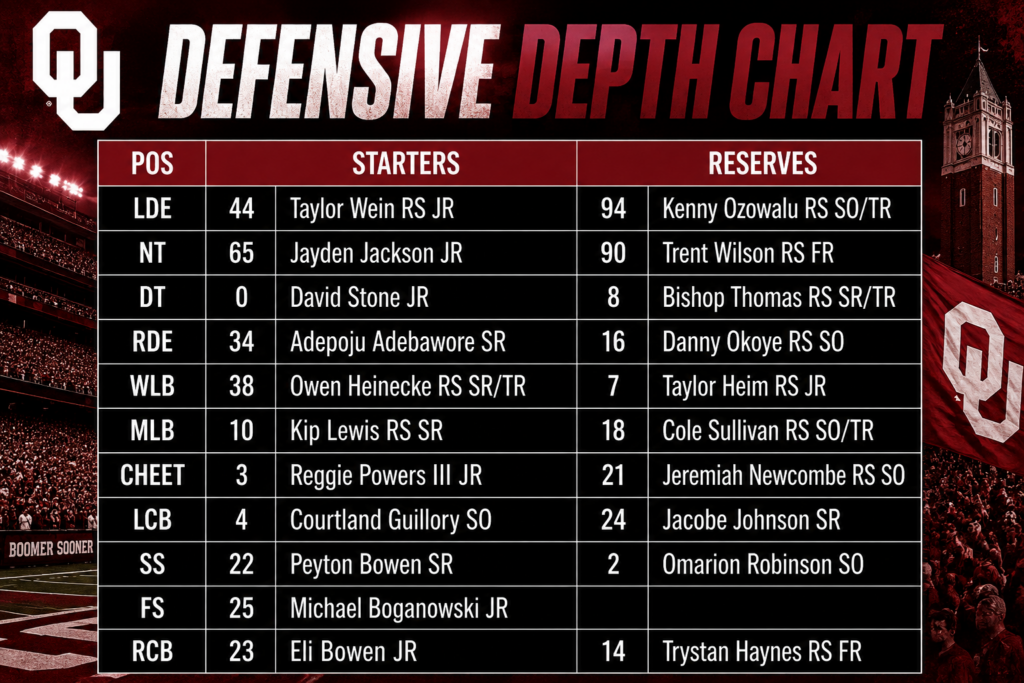
David Stone has a chance to become the next Oklahoma defensive star. The 315-pound tackle recorded 42 tackles, eight tackles for loss and six quarterback hurries last season, and his underlying run-defense numbers were outstanding. Behind him, Kip Lewis returns after leading Oklahoma with 76 tackles while contributing 10.5 tackles for loss and four sacks. Lewis now has 209 career tackles, giving Venables an experienced leader in the middle.
The secondary also has plenty of experience with Peyton Bowen and Eli Bowen, both preseason second-team All-SEC selections. In fact, Stone, Lewis, Peyton Bowen, Eli Bowen and defensive lineman Taylor Wein all landed on the coaches’ preseason second team. That’s an impressive amount of proven talent returning from an already dominant unit.
Venables’ Oklahoma tenure has been inconsistent overall, but there’s no longer much doubt about what he’s built defensively. The Sooners can win games against elite opponents with this defense. If Stone takes another step toward becoming a dominant interior player, Oklahoma could again have one of the five or ten best defenses in the country.
Overview and Projection
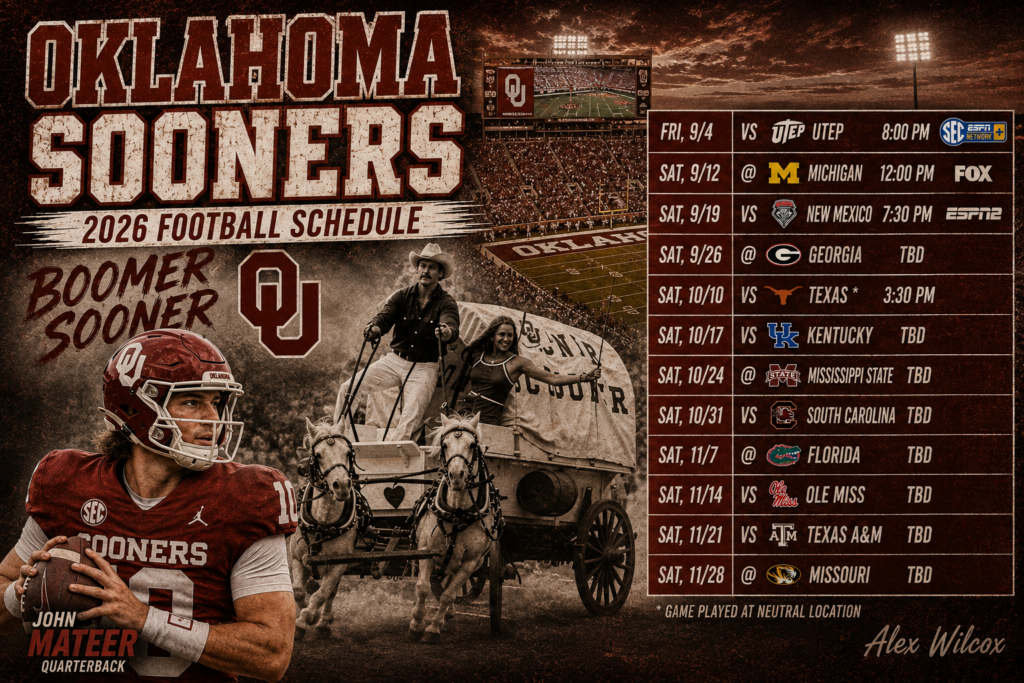
I’m settling on 9–3 overall and 6–3 in the SEC even though I think Oklahoma is capable of beating almost anybody. The defense should prevent many bad performances, but asking this team to navigate Michigan, Georgia, Texas, Florida, Ole Miss, Texas A&M and Missouri without multiple losses is unrealistic.
The ceiling ultimately comes down to Mateer. If he’s healthy and Oklahoma gets improved offensive-line play, the Sooners have legitimate playoff upside because I already trust the defense. I don’t quite have them at the Texas-Georgia-LSU-Tennessee level in my SEC projections, but Oklahoma is close enough that nobody should want to play them. Nine wins feels like the most likely outcome, but this is exactly the kind of team capable of turning 9–3 into 10–2 if the offense finally catches up with the defense.
Projected Record: 9-3 (6-3)
Ole Miss Rebels
Offensive Outlook
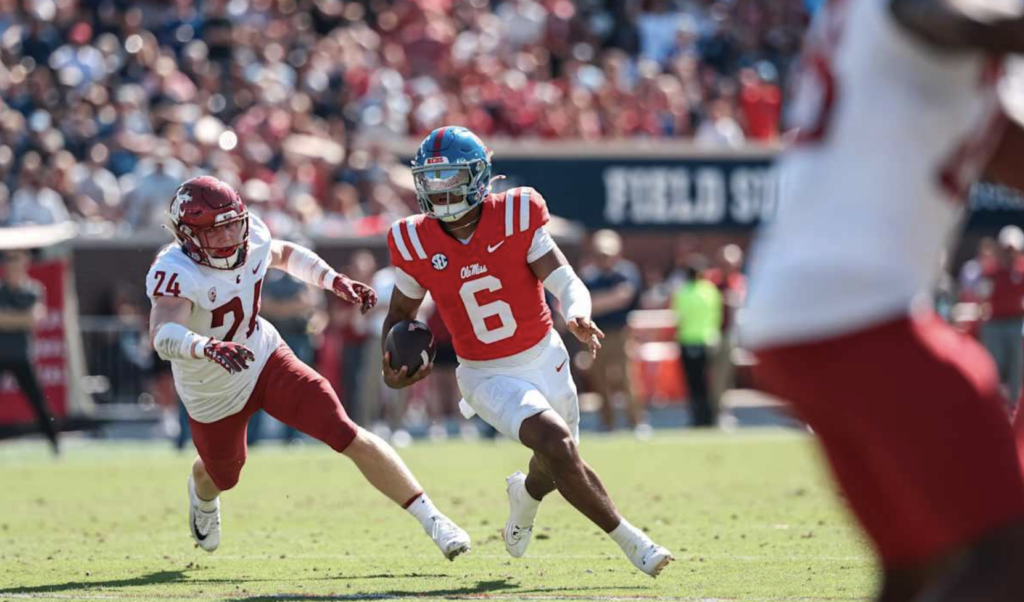
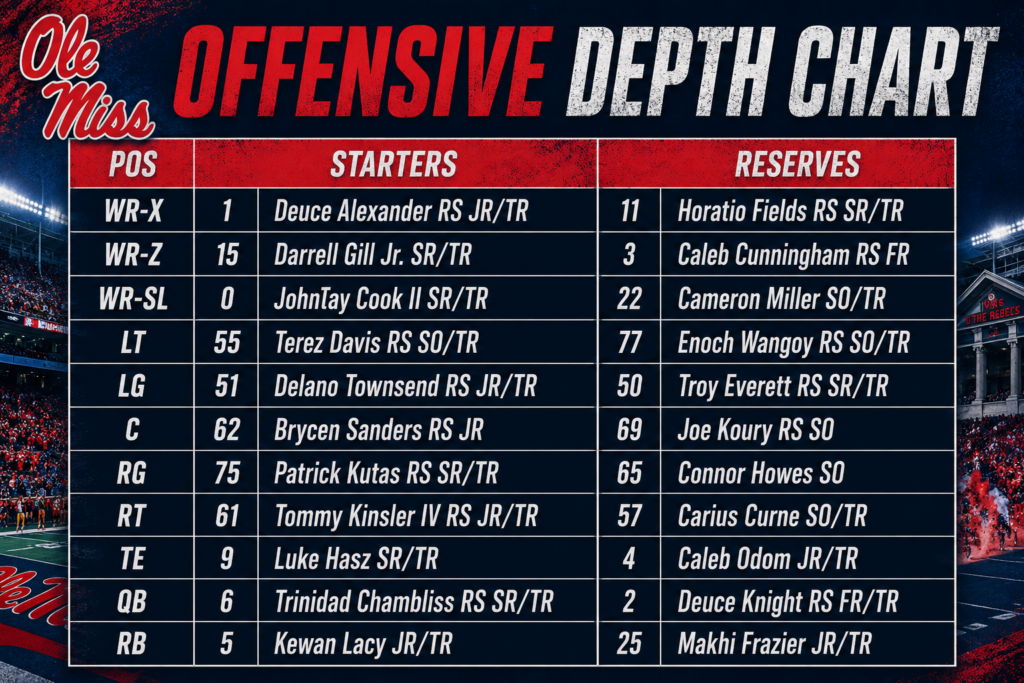
The Rebs enter 2026 with a new head coach but one of the best offensive foundations in the country. Trinidad Chambliss returns after one of the great breakout seasons of 2025, completing 66.1% of his passes for 3,937 yards, 22 touchdowns and only three interceptions, while adding 527 rushing yards and eight scores. He finished eighth in the Heisman voting and led Ole Miss to the College Football Playoff semifinals. He’s on my short list of Heisman contenders.
The other monster is Kewan Lacy, who set Ole Miss single-season records with 1,567 rushing yards and 24 rushing touchdowns while earning first-team All-America honors. Having Chambliss and Lacy in the same backfield gives Ole Miss one of the best quarterback-running back combinations in college football. Deuce Alexander also returns after catching 44 passes for 684 yards, while transfers Johntay Cook II, Horatio Fields and Darrell Gill Jr. help replenish the receiving corps.
There is also meaningful continuity up front. Brycen Sanders, Patrick Kutas and Delano Townsend return as starters, with Sanders and Kutas having started all 15 games last season. The bigger change comes on the sideline following Lane Kiffin’s departure, but Ole Miss intentionally maintained schematic continuity by elevating John David Baker to offensive coordinator. Chambliss has described the transition as seamless because of Baker’s familiarity with the existing system.
This offense probably won’t look exactly like Kiffin’s, but it doesn’t need to be reinvented. Chambliss, Lacy and a veteran offensive line give Ole Miss enough returning firepower to remain one of the SEC’s most explosive offenses.
Defensive Outlook
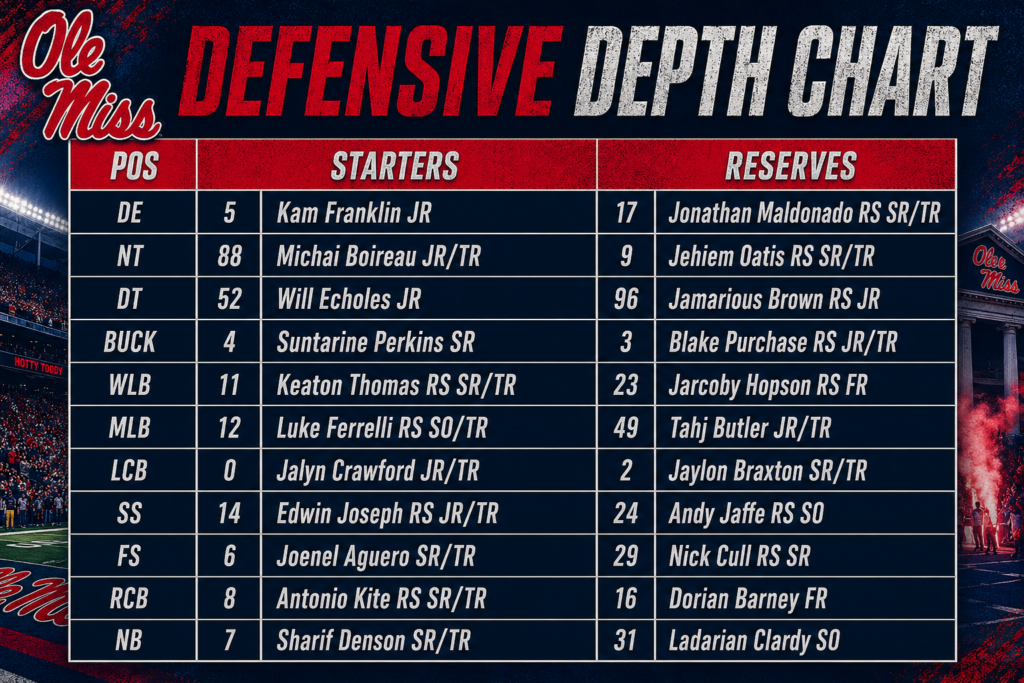
The transition to Pete Golding as head coach should be particularly smooth defensively because Golding has already spent three seasons constructing this unit. Ole Miss loses seven defensive starters from last year’s historic team, but the Rebels attacked those losses through the portal and finished with the No. 2 transfer class nationally according to 247Sports’ rankings.
The front seven still has several difference-makers. Will Echoles enters the season as a preseason first-team All-SEC defensive lineman, while Suntarine Perkins earned second-team recognition and Kam Franklin landed on the third team. That’s a strong foundation for Golding, particularly with Perkins’ versatility and ability to create pressure from different alignments.
Ole Miss also added significant defensive help through the portal, including former Oregon edge defender Blake Purchase, Alabama defensive lineman Jordan Renaud and Auburn corner Jalyn Crawford. With so much turnover, I expect the defense to take longer than the offense to establish itself, but Golding’s familiarity with the personnel and system should help.
This may not immediately be an elite defense, but it doesn’t have to be. If Ole Miss can remain disruptive up front and avoid a major drop-off in the secondary, the offense should provide more than enough support to keep the Rebels among the SEC’s best teams.
Overview and Projection
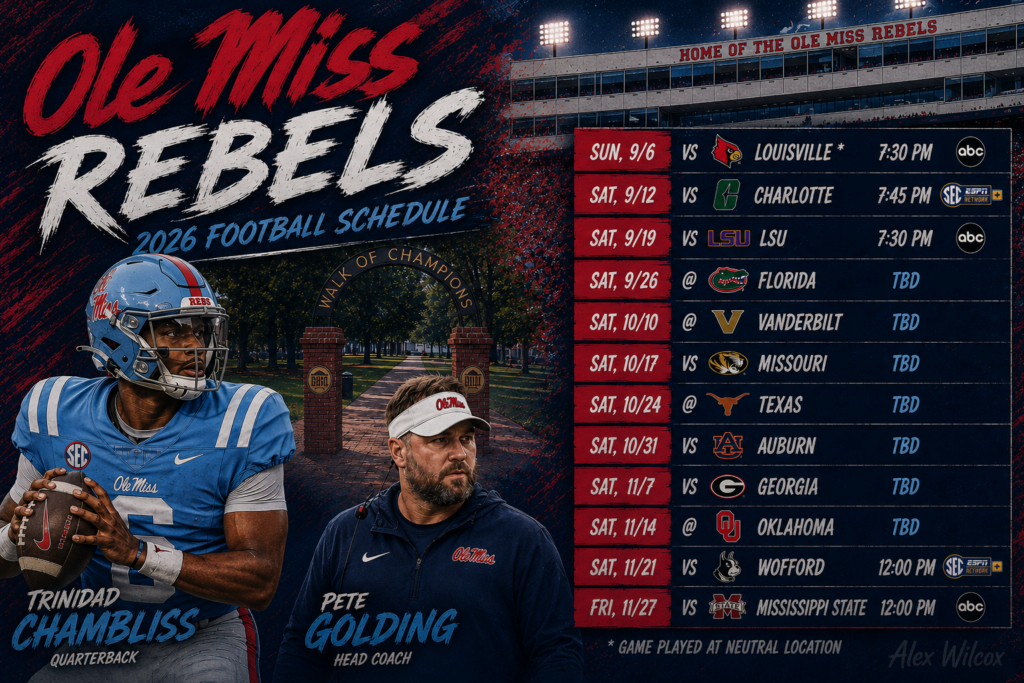
I have the Rebels finishing 9–3 overall and 6–3 in the SEC because the offensive floor is so high. Chambliss is my highest-rated SEC quarterback, Lacy is one of the best running backs in America, and enough of the offensive line returns to give them stability around those stars.
The biggest variable is what happens without Kiffin. Ole Miss is coming off its first 13-win season in program history and a CFP semifinal appearance, so Golding isn’t being asked merely to maintain a good program—he’s following the most successful season Ole Miss has ever had. I expect some regression in the win column, but not a collapse. At 9–3, Ole Miss should remain firmly in the playoff conversation, and Chambliss gives the Rebels enough firepower to beat anyone on their schedule.
Projected Record: 9-3 (6-3)
Alabama Crimson Tide
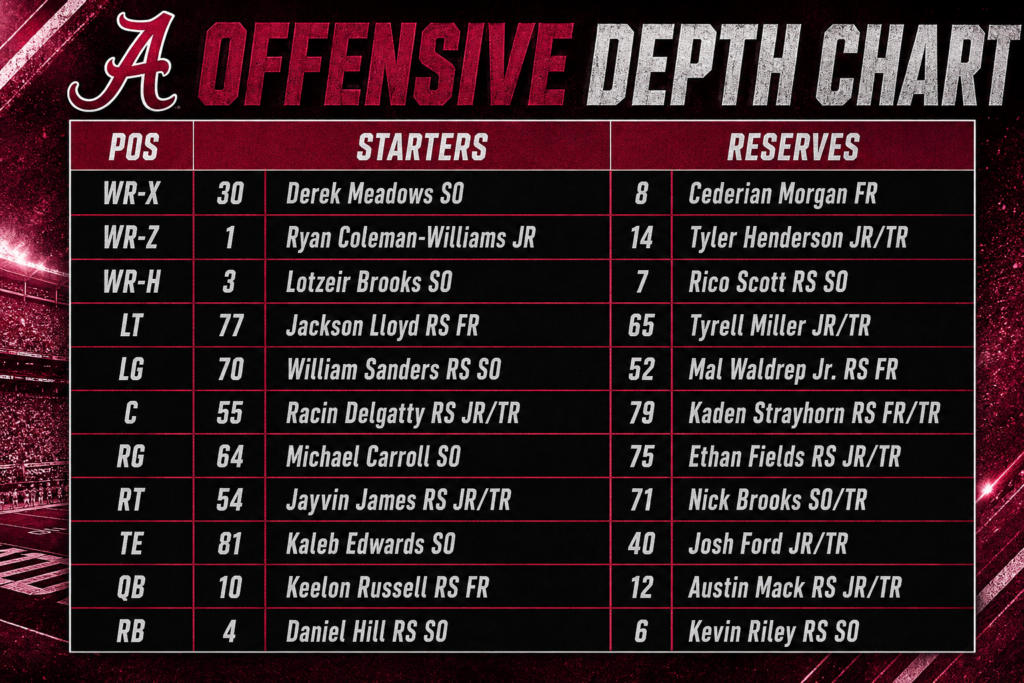
Offensive Outlook
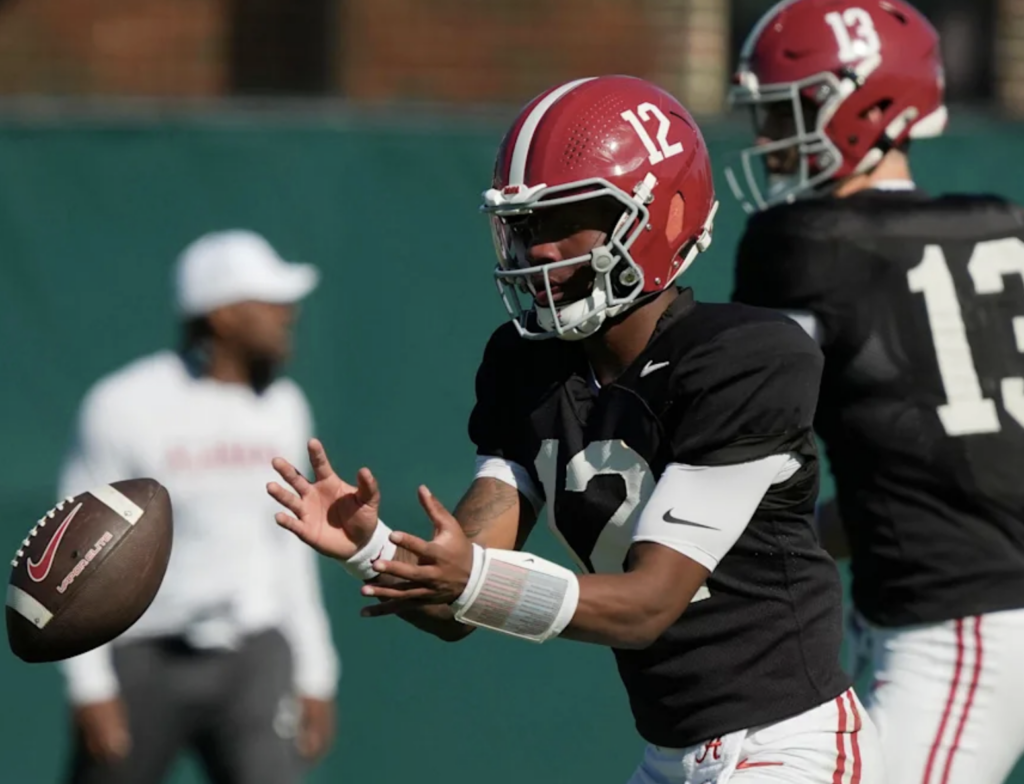
Alabama enters 2026 with considerably more uncertainty at quarterback than it had a year ago, but also with one of the most talented young passers in the country. Keelon Russell has won the starting job after spending 2025 behind Ty Simpson. Russell appeared in only two games last season, completing 11 of 15 passes for 143 yards and two touchdowns, so this will essentially be his first real exposure to SEC football.
The good news is that Alabama gives him an elite receiver to lean on. Ryan Williams, now listed as Ryan Coleman-Williams, returns as the centerpiece of the passing game and was selected preseason All-SEC. Alabama has to replace significant production elsewhere, including Ty Simpson and Germie Bernard, so Russell’s development and the emergence of complementary receivers will determine how explosive this offense becomes. Ryan Grubb remains the offensive coordinator, giving Alabama continuity in a quarterback-friendly system.
The offensive line should help ease the transition. Michael Carroll earned preseason second-team All-SEC recognition after an impressive freshman season, and Alabama continues to recruit at an elite level up front. The running game, however, needs to improve substantially. Alabama averaged only 104.1 rushing yards per game and 3.4 yards per carry in 2025, an unusually poor number for this program. Five-star freshman EJ Crowell is an intriguing option after rushing for 2,632 yards and 35 touchdowns during his final high school season.
There is plenty of raw talent here, but I don’t trust Alabama’s offense quite as much as Texas, LSU, Tennessee or Ole Miss entering the season. Russell could eventually become a star, but asking a first-year starter to immediately navigate the SEC is a major variable.
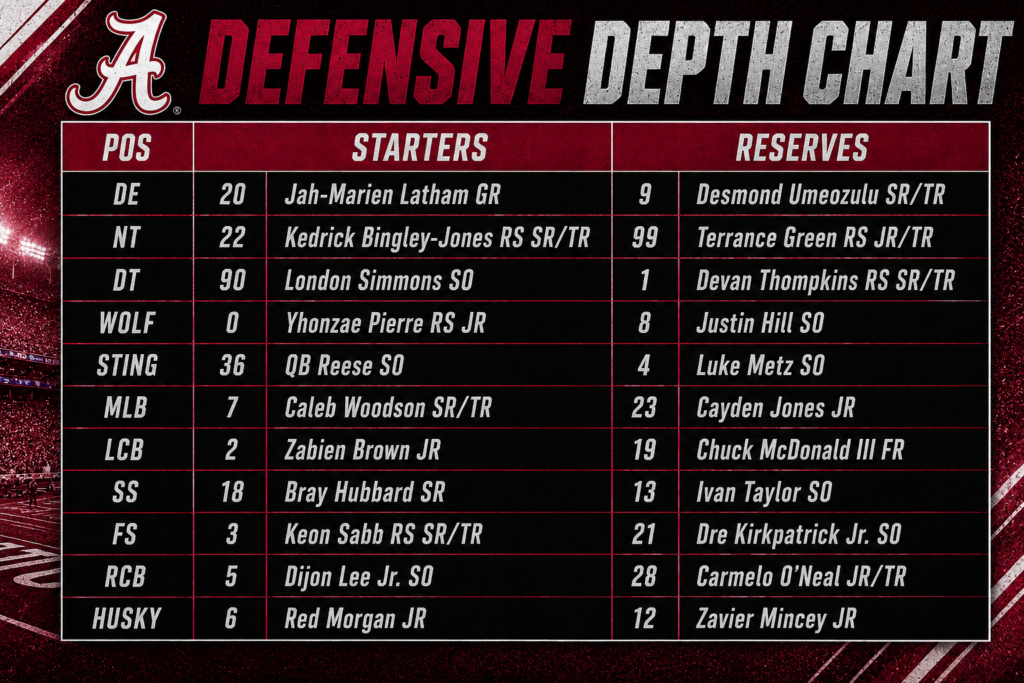
Defensive Outlook
The defense is the biggest reason Alabama remains a serious contender. The Crimson Tide allowed only 19.2 points and 296.8 yards per game in 2025, including just 169.9 passing yards per game. Kane Wommack remains defensive coordinator, and his secondary could be one of the best in college football.
Zabien Brown and Bray Hubbard were both selected preseason first-team All-SEC, while Keon Sabb earned third-team recognition. That’s an exceptional amount of experience on the back end. Alabama intercepted 11 passes while allowing only 16 passing touchdowns last season, and I expect the secondary to again be the strength of the team.
The front seven has more turnover, but Yhonzae Pierre is a breakout candidate off the edge and earned preseason third-team All-SEC honors. Virginia Tech transfer Caleb Woodson should step directly into an important role at inside linebacker after accumulating 152 tackles and 11.5 tackles for loss across three seasons in Blacksburg.
Alabama may no longer overwhelm every opponent with defensive depth the way some Nick Saban teams did, but this is still an extremely talented unit. If the front seven generates consistent pressure, Wommack’s secondary is good enough to make this one of the better defenses in the SEC.
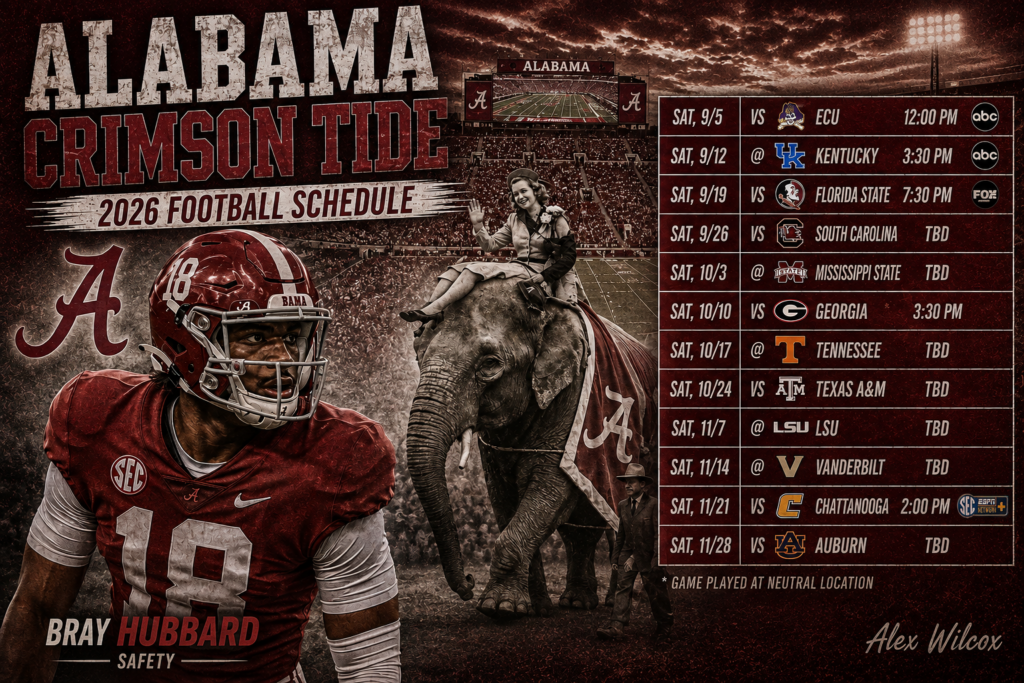
Overview and Projection
I have Alabama 9–3 overall and 6–3 in the SEC. The defense and overall roster talent keep the floor high, and Russell could eventually make this projection look too conservative. But Alabama is replacing a quarterback who threw for 3,567 yards and 28 touchdowns, and the running game needs significant improvement after last year’s struggles.
This is still Alabama, and the talent level means 10–2 or even better is absolutely within reach if Russell develops quickly. But compared with the six teams I have ahead of the Tide, I see slightly more uncertainty at the most important position. Alabama should remain dangerous enough to beat anyone, but I have the Crimson Tide taking a small step backward to 9–3 while Russell develops into the program’s next long-term quarterback.
Projected Record: 9-3 (6-3)
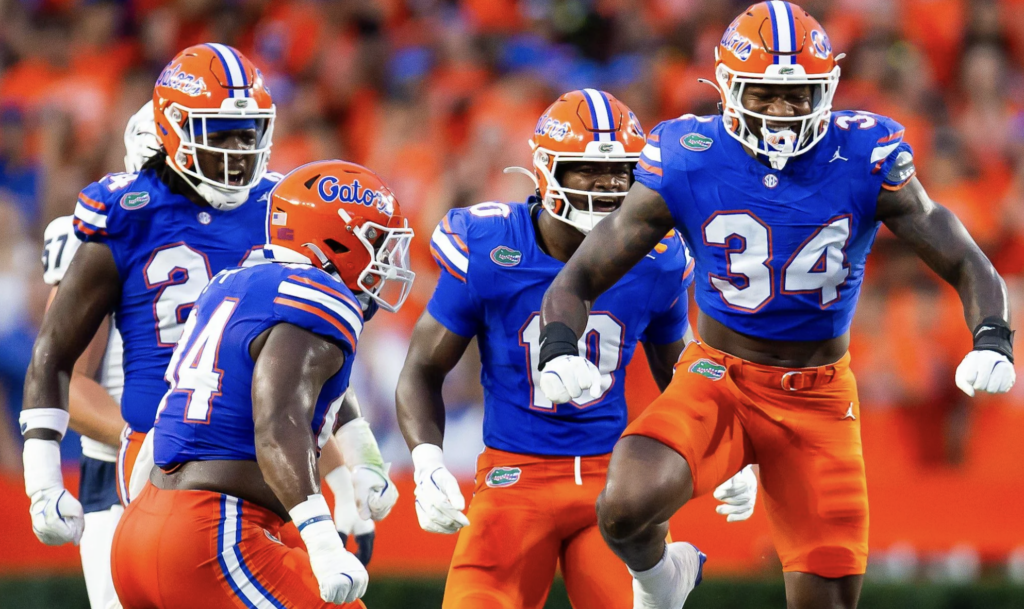
Florida Gators
Offensive Outlook
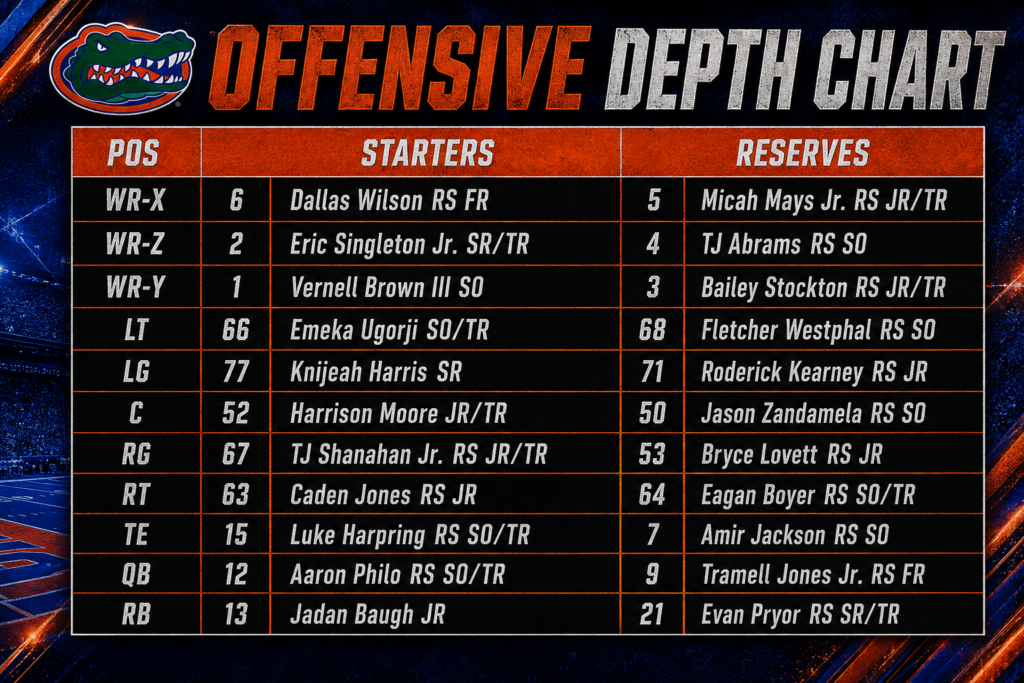
Florida is one of my favorite rebound candidates in the SEC. After averaging only 21.6 points and 341.3 yards per game during a disastrous 4–8 season, the Gators completely overhauled the operation by hiring Jon Sumrall and bringing in former Georgia Tech offensive coordinator Buster Faulkner. The offense should look considerably different, beginning with a new quarterback.
Georgia Tech transfer Aaron Philo has moved to the top of the depth chart and will receive the majority of first-team reps entering the opener. Philo has limited experience but intriguing upside, throwing for 938 yards across eight career appearances and producing 373 yards in his lone 2025 start. His familiarity with Faulkner’s system helped him beat out Tramell Jones Jr. for the lead job.
The real reason for optimism is the talent surrounding him. Dallas Wilson flashed star potential as a freshman, and Vernell Brown III gives Florida another promising young receiver. Sumrall then added former Auburn and Georgia Tech receiver Eric Singleton Jr., who caught 58 passes for 534 yards last season and brings legitimate game-breaking speed. Florida also returns Jadan Baugh in the backfield, giving Faulkner an established SEC running back to build around.
There will be growing pains with a new quarterback, coach and system, but I like the pieces. Philo doesn’t have to become a superstar for this offense to improve significantly. If the offensive line holds up, Baugh establishes the run and Wilson develops into the receiver I think he can become, Florida should be much more dangerous than last year’s numbers suggest.
Defensive Outlook
Florida’s defense wasn’t nearly as bad as the 4–8 record implies. The Gators allowed 24 points and 376.8 yards per game despite repeatedly being placed under pressure by an inconsistent offense. They were particularly effective against the pass, allowing only 13 passing touchdowns in 12 games.
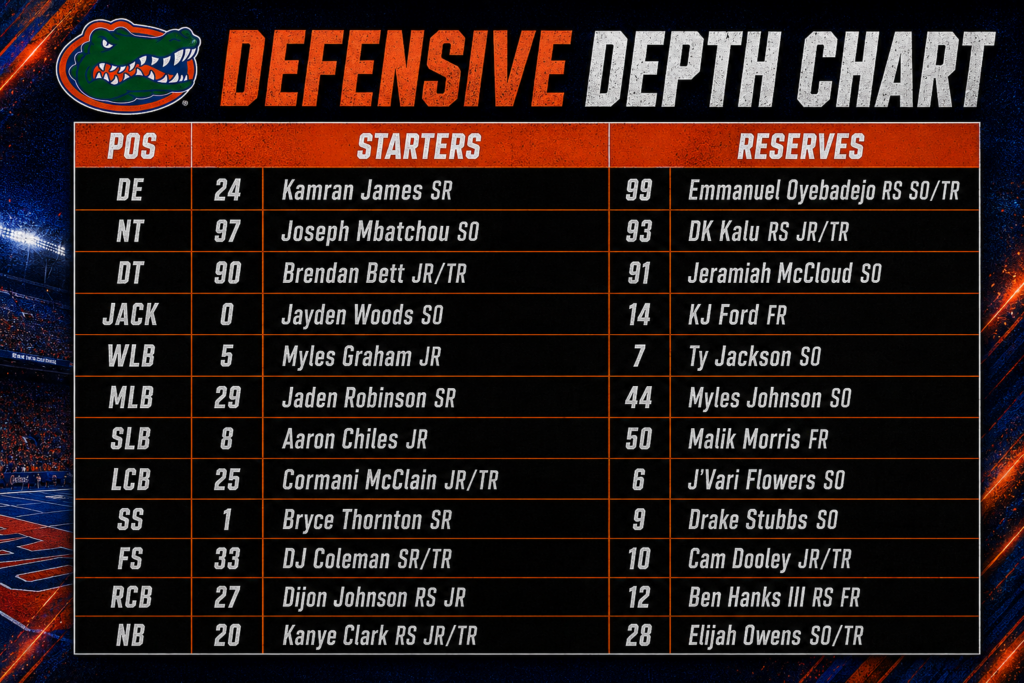
Sumrall brought Brad White from Kentucky to coordinate the defense, giving Florida an experienced SEC play caller. The challenge is roster turnover. Sumrall’s first roster includes 34 transfers and 24 freshmen, meaning more than half of Florida’s scholarship roster consists of newcomers. That’s a massive overhaul and could produce some inconsistency early.
At the same time, Florida didn’t lack young defensive talent before the coaching change, and Sumrall has emphasized building a more physical identity. I particularly like the potential of this front seven if the new pieces settle into White’s system quickly. Florida doesn’t need to become Georgia defensively; it simply needs to turn last year’s respectable stretches into consistent performances.
That’s really the theme of the entire team. There is enough athletic ability on this roster for Florida to field a good SEC defense. The question is how quickly White can organize a group containing so many new players.
Overview and Projection
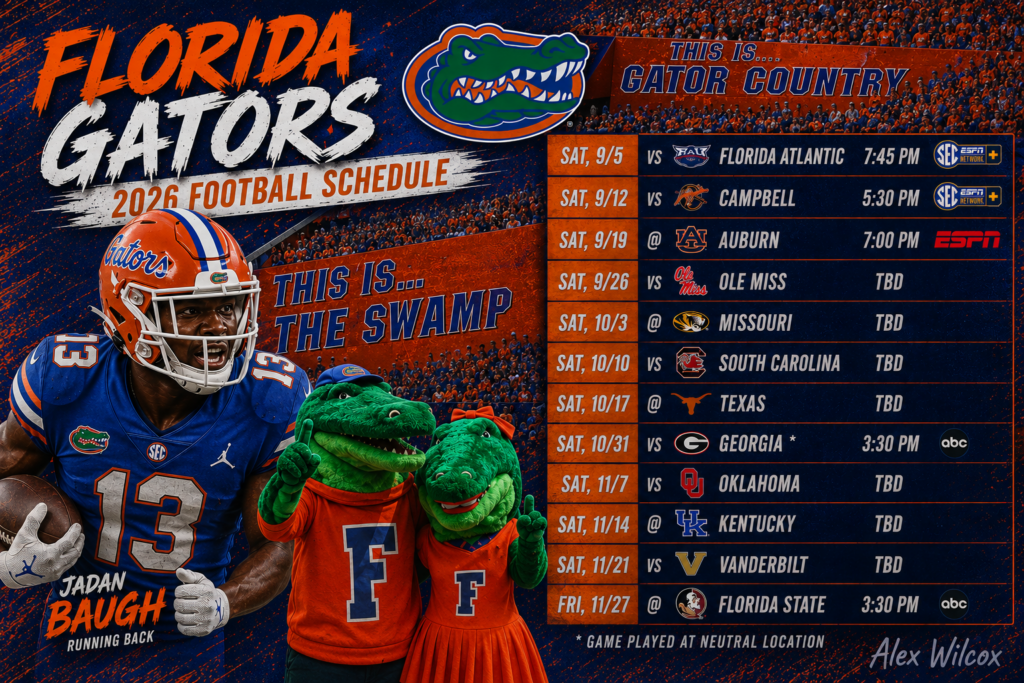
I have the Gators finishing 8–4 overall and 5–4 in SEC play. The ceiling depends heavily on Philo. If he’s merely competent, Florida can still win seven or eight games because Baugh and the young skill talent give the offense support. If Philo becomes one of the SEC’s breakout quarterbacks, nine wins becomes realistic.
This is probably a year too early for Florida to seriously challenge Texas or Georgia at the top of the conference. But I don’t think the Gators are far away from becoming relevant again. Sumrall is the biggest reason I’m buying the turnaround, and I expect 2026 to be remembered as the season Florida started looking like Florida again.
Projected Record: 8-4 (5-4)
Texas A&M Aggies
Offensive Outlook
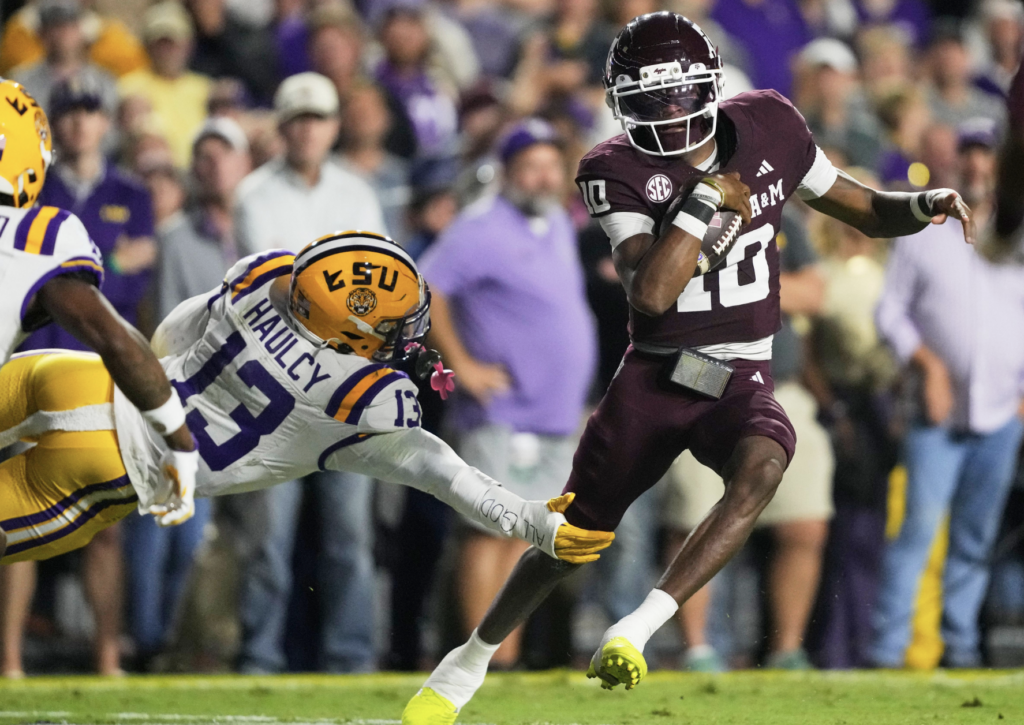
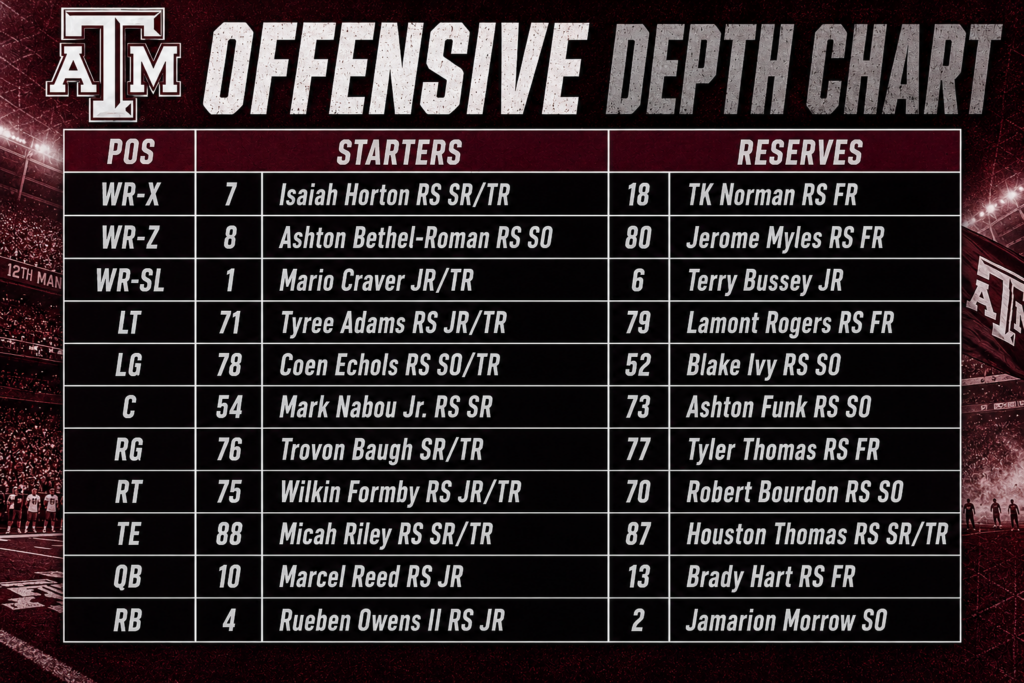
The Aggies enter 2026 in a different position than a year ago. After an 11–2 season and the program’s first College Football Playoff appearance, expectations are no longer about whether Mike Elko can make the Aggies competitive—they’re about whether A&M can sustain that success. The offense starts with Marcel Reed, now an experienced multi-year starter with 5,407 career passing yards, 41 passing touchdowns, 1,085 rushing yards and 14 rushing scores.
The receiving corps remains a major strength despite losing KC Concepcion to the NFL. Mario Craver takes over as the clear No. 1 after emerging as one of the conference’s most explosive receivers, while Ashton Bethel-Roman returns after producing 503 yards and five touchdowns on only 24 receptions. Alabama transfer Isaiah Horton adds a 6-foot-4 target after recording 511 yards and eight touchdowns last season. Craver was also selected first-team preseason All-SEC at both receiver and all-purpose player.
The backfield is led by Rueben Owens, who paced A&M with 639 rushing yards at 5.4 yards per carry last season. Jamarion Morrow should receive a larger workload, and five-star freshman KJ Edwards gives the Aggies another high-upside option.
My concern is the offensive line. Four starters departed for the NFL, leaving veteran center Mark Nabou Jr. as the lone returning starter. Elko responded by adding experienced transfers Tyree Adams, Coen Echols, Trovon Baugh and Wilkin Formby, all with SEC experience. If that group comes together quickly, A&M should remain dangerous offensively. Reed’s experience and dual-threat ability give this unit a high floor, but the rebuilt line is the biggest reason I’m hesitant to project another 11-win regular season.
Defensive Outlook
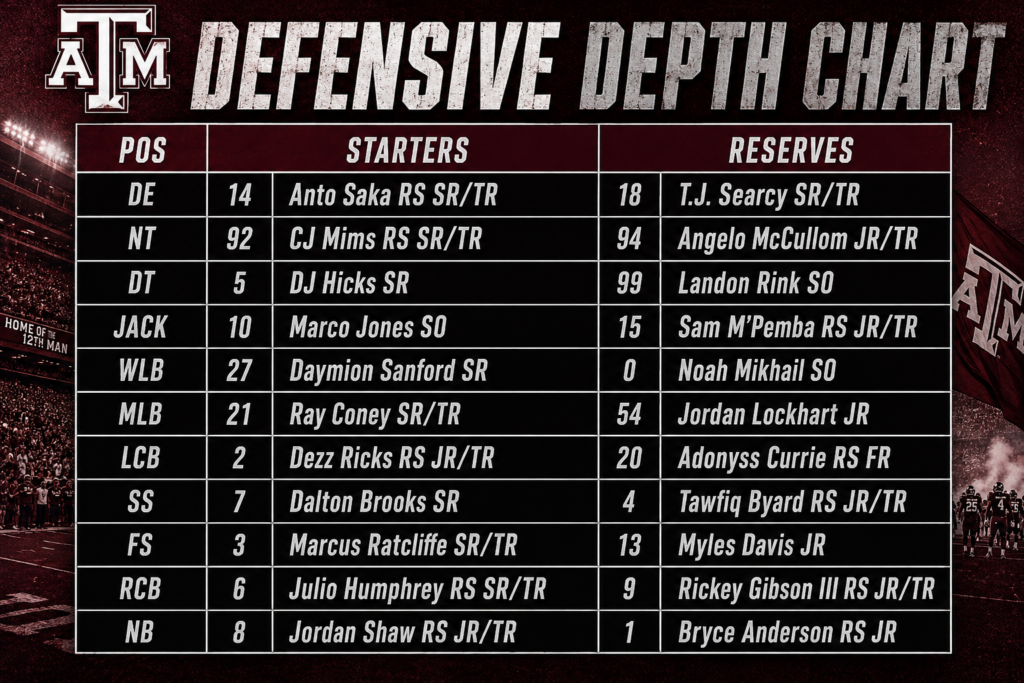
A&M’s defense was excellent last season, finishing 18th nationally in total defense at 307.4 yards allowed per game, second in sacks and third in tackles for loss while leading the country in third-down defense. Mike Elko remains heavily involved in calling the defense, with Lyle Hemphill taking over as coordinator following Jay Bateman’s departure.
The problem is replacing some major pieces. SEC Defensive Player of the Year Cashius Howell, linebacking leader Taurean York, defensive tackles Albert Regis and Tyler Onyedim and corner Will Lee III are all gone. That’s a substantial amount of production and leadership from a defense that played a huge role in last year’s success.
There is still plenty to like. DJ Hicks is a former five-star who broke out last season and earned preseason third-team All-SEC honors. Northwestern transfer Anto Saka brings 12 career sacks, while Tulsa transfer Ray Coney recorded 129 tackles in 2025. A&M also added Tennessee corner Rickey Gibson III and defensive tackles CJ Mims and Angelo McCullom through the portal.
I trust Elko to put together a good defense because that’s his specialty, but I do expect some regression after losing so many high-level players. The defensive line still has plenty of talent, but replacing Howell’s pass rush and York’s leadership won’t happen automatically.
Overview and Projection
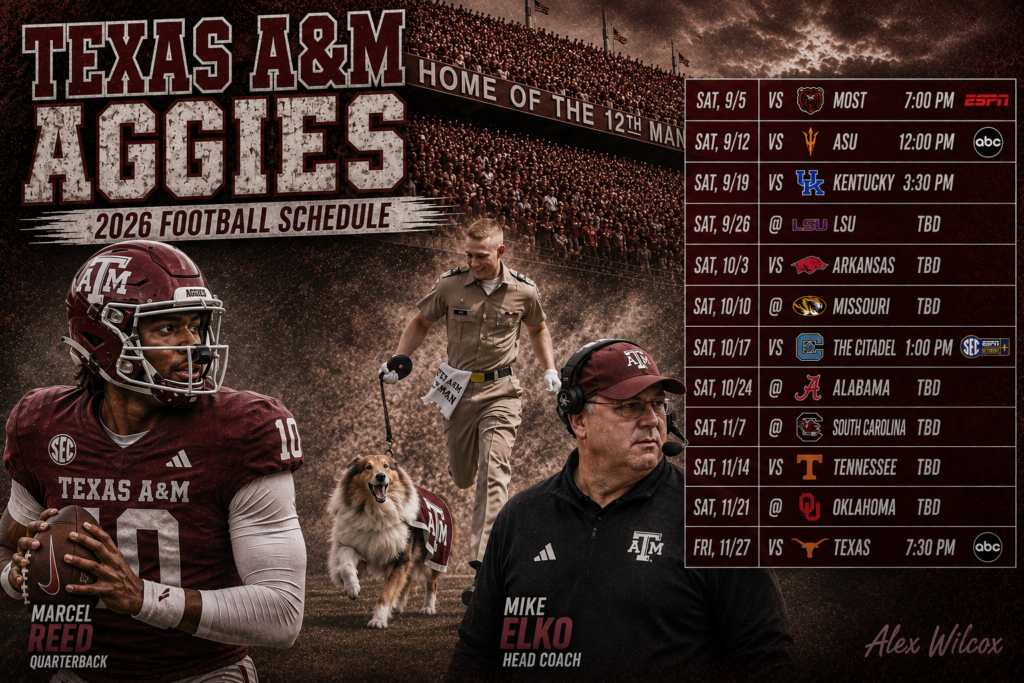
I have the Aggies finishing 8–4 overall and 5–4 in the SEC. Reed, Craver and Owens give them enough offensive firepower to remain dangerous, and I trust Elko to keep the defense from falling too far. But there are simply too many difficult road games and too much turnover in the trenches for me to project another 10- or 11-win season.
A&M may actually be a better program in 2026 without having a better record. Elko has clearly elevated the program, but sustaining success in the SEC is often harder than achieving it the first time. I still expect the Aggies to be a top-25-caliber team capable of upsetting Texas, Tennessee or one of their major road opponents, but 8–4 feels like the most realistic outcome for a talented roster navigating a much more difficult path.
Projected Record: 8-4 (5-4)
Auburn Tigers
Offensive Outlook
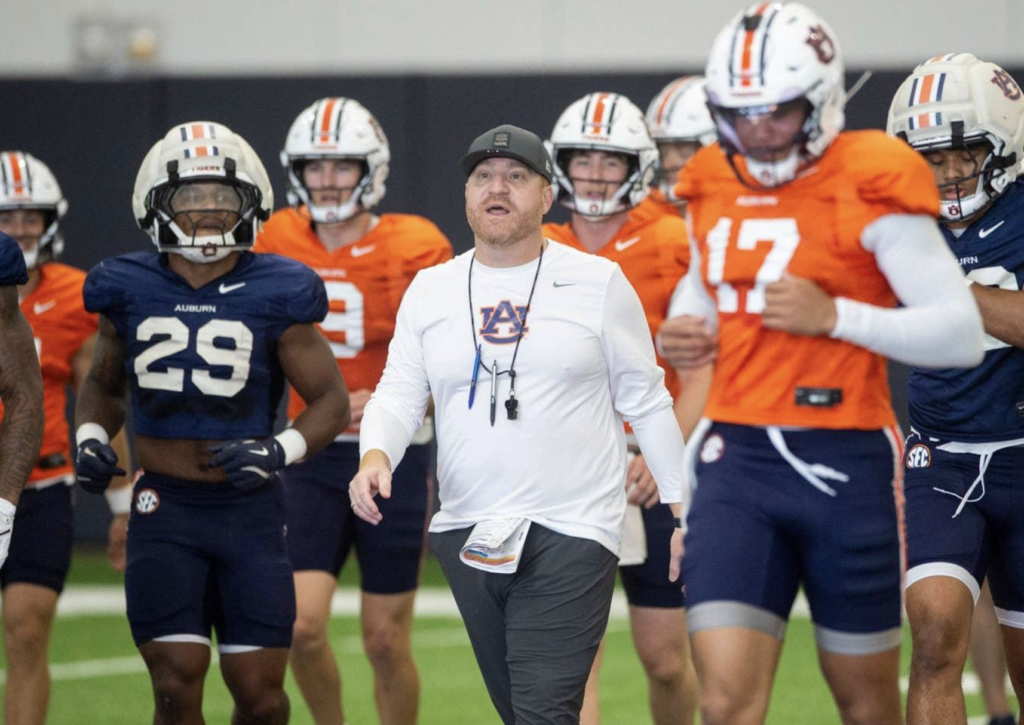
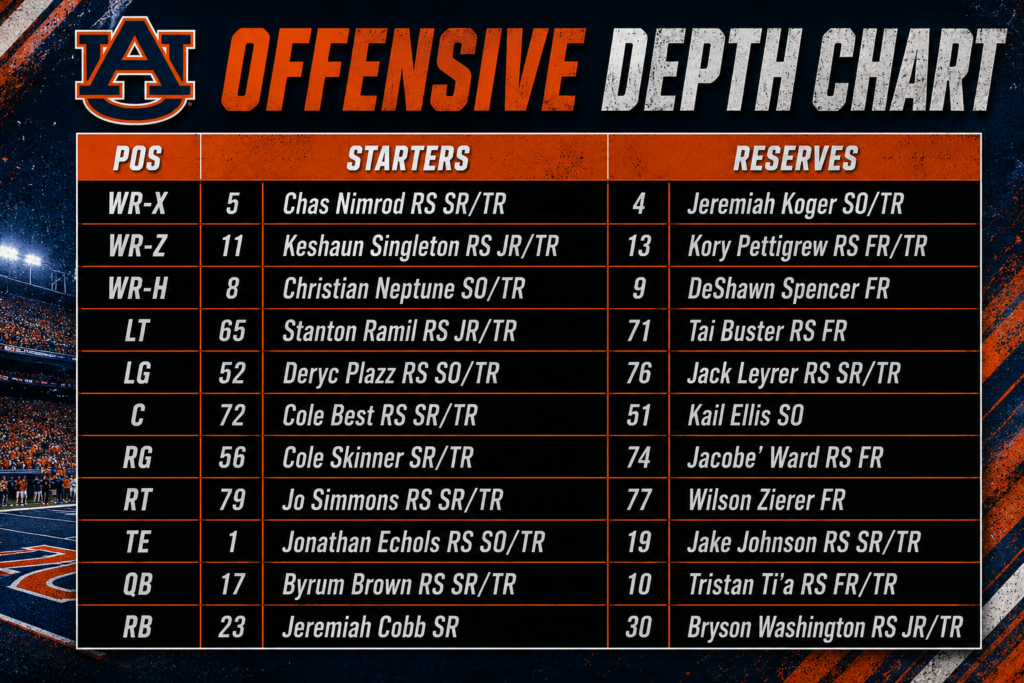
Auburn begins the Alex Golesh era with one of the SEC’s largest roster overhauls and, importantly, a quarterback who already knows exactly how Golesh wants to operate. Byrum Brown followed him from South Florida after a spectacular 2025 season in which he completed 66.3% of his passes for 3,158 yards and 28 touchdowns while rushing for 1,008 yards and 14 scores. He led all FBS quarterbacks with 42 total touchdowns and 347.2 yards of offense per game. Brown’s combination of experience, mobility and familiarity with the scheme should make Auburn’s offensive transition much smoother than most first-year coaching changes.
Golesh brought several additional USF players with him, including running back Nyakhi Davenport, who rushed for 612 yards and seven touchdowns at 6.2 yards per carry, and receiver Jeremiah Koger, who caught 38 passes for 597 yards and eight scores. Auburn ultimately added 39 portal transfers, including nine offensive linemen, in an attempt to completely reshape a roster that badly needed a new identity.
Losing Cam Coleman to Texas is obviously significant. Auburn doesn’t have another receiver on the roster whom I expect to simply replace Coleman’s production and physical presence. But Golesh’s system produced 43 points and 501.7 yards per game at USF last season, and Brown gives him the ideal quarterback to implement it immediately.
The biggest question is how that system translates from the American to the SEC. I expect a decline in Brown’s raw numbers against substantially better defenses, but Auburn should still be dramatically more dynamic offensively than it has been in recent seasons.
Defensive Outlook
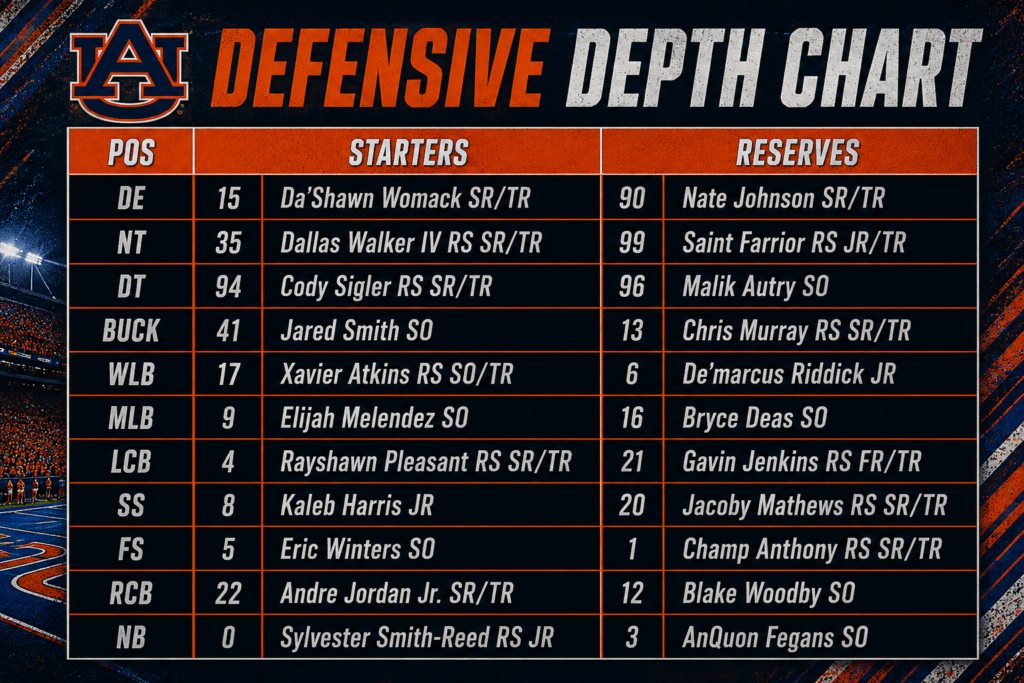
Unlike the offense, Auburn maintained important continuity on defense by retaining DJ Durkin as defensive coordinator. The Tigers allowed only 99.3 rushing yards per game and 2.86 yards per carry in 2025, ranking 12th nationally in rushing defense, while their 329.2 total yards allowed per game were Auburn’s best mark since 2017. Keeping Durkin around while Golesh rebuilds the offense was an excellent move.
The star is linebacker Xavier Atkins, who broke out with 84 tackles, an SEC-leading 17 tackles for loss and nine sacks last season. He earned second-team All-America and first-team All-SEC honors and enters 2026 as a preseason first-team All-SEC selection. He’s exactly the type of disruptive linebacker Durkin can build around.
The secondary has experience as well. Champ Anthony returns after battling injuries and earned preseason third-team All-SEC recognition, while Rayshawn Pleasant intercepted two passes against Arkansas last season and remains dangerous both at corner and in the return game. Auburn also used the portal heavily on this side of the ball, adding seven defensive backs among its massive transfer class.
There will inevitably be chemistry questions with this much roster turnover, but Durkin, Atkins and an already-established defensive identity give Auburn more stability on this side of the ball than you’d normally expect from a first-year coaching staff.
Overview and Projection
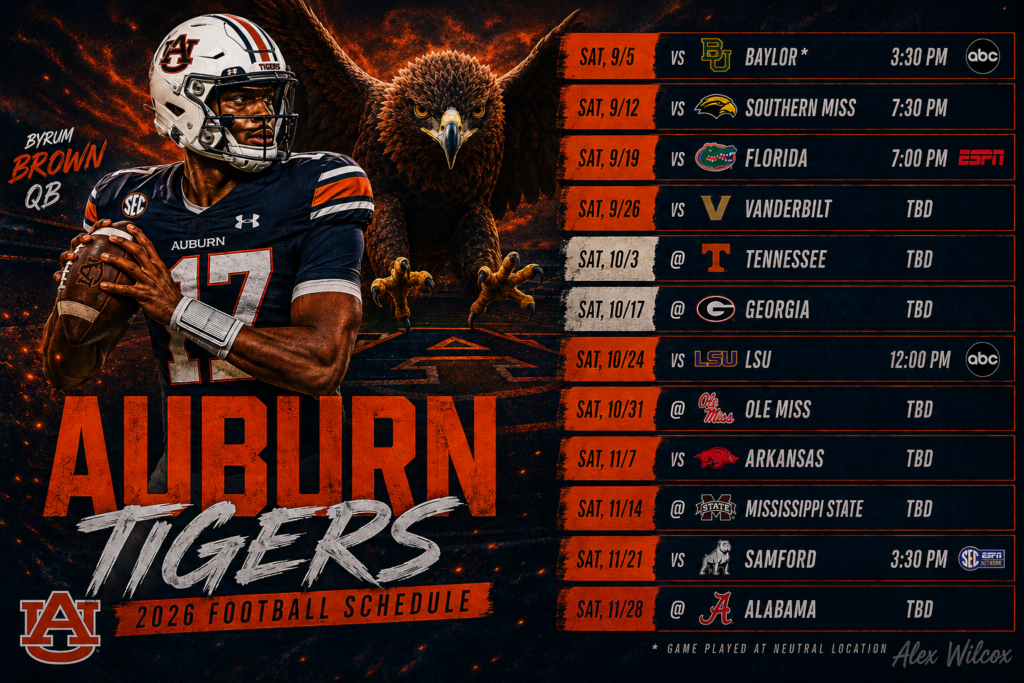
I have Auburn finishing 7–5 overall and 4–5 in the SEC. Brown and Golesh should make the offense immediately more entertaining and productive, while Durkin gives the defense enough continuity to prevent a complete rebuilding season. I particularly like Auburn’s chances of becoming a dangerous team as the season progresses and the enormous transfer class becomes more comfortable.
The ceiling is higher than seven wins if Brown’s production translates immediately to the SEC, but the schedule makes a major Year 1 breakthrough difficult. I view 2026 as the beginning of Auburn’s climb rather than the finished product: seven wins, a bowl appearance and clear evidence that Golesh has the program moving in the right direction would constitute a successful first season on the Plains.
Projected Record: 7-5 (4-5)
Missouri Tigers
Offensive Outlook
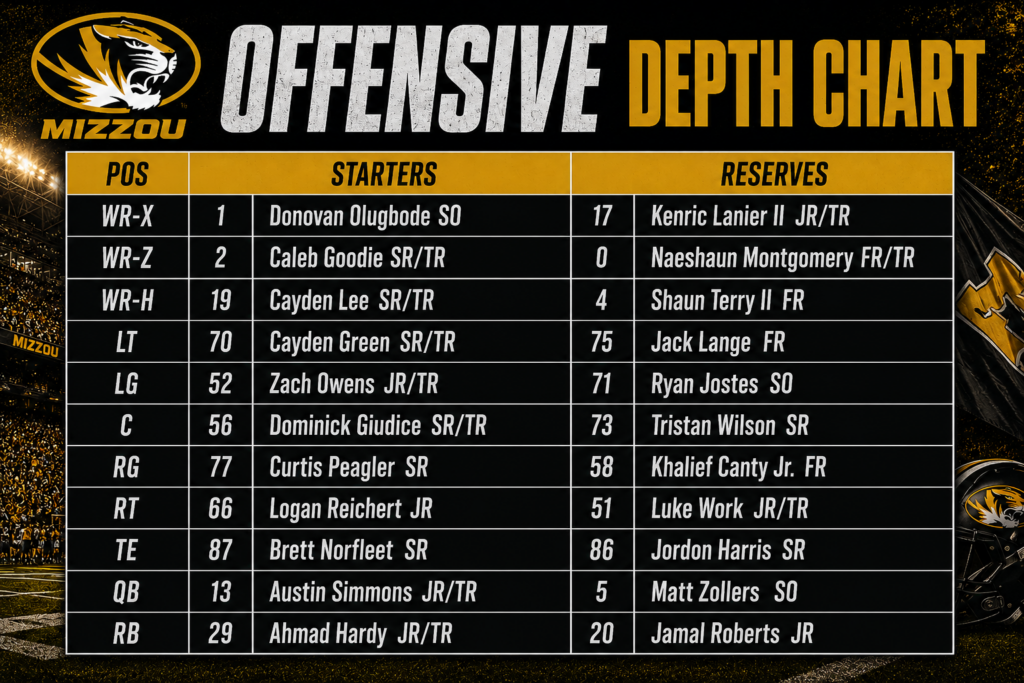
Missouri’s offense revolves around one of the best running backs in the country. Ahmad Hardy returns after a remarkable 2025 season in which he rushed for a school-record 1,649 yards and 16 touchdowns at 6.4 yards per carry, finishing second nationally in rushing yards. He also led the nation with 1,186 yards after contact and forced 97 missed tackles. Hardy is recovering from an offseason injury, but he’s already been named preseason first-team All-SEC and gives Missouri a legitimate All-America centerpiece.
The bigger variable is quarterback Austin Simmons. The Ole Miss transfer began 2025 as the Rebels’ starter before an injury opened the door for Trinidad Chambliss, and Simmons ultimately finished his Ole Miss career with 1,026 passing yards, six touchdowns and five interceptions. He has since won Missouri’s starting job and brings considerably more arm talent than his limited résumé might suggest.
Simmons is an especially interesting fit alongside Missouri’s powerful running game. With defenses forced to account for the Tigers on the ground, his ability to attack vertically could create explosive opportunities off play action. He’s still relatively inexperienced, so consistency is a concern, but Simmons raises Missouri’s offensive ceiling considerably if he puts everything together.
Missouri also has to replace leading receiver Kevin Coleman Jr., who caught 66 passes for 732 yards before being selected in the NFL Draft. The Tigers still have young options such as Donovan Olugbode and DaMarion Fowlkes, while Florida transfer Naeshaun Montgomery joins the receiver room. The most reassuring piece up front is left tackle Cayden Green, a preseason first-team All-SEC selection.
Hardy gives this offense an extremely high rushing floor, but Missouri needs Simmons and its new-look receiving corps to develop quickly. If opponents can load the box without fearing the passing game, life becomes much harder for Hardy. If Simmons takes a significant jump, Missouri becomes a much more dangerous team than my projection suggests.
Defensive Outlook
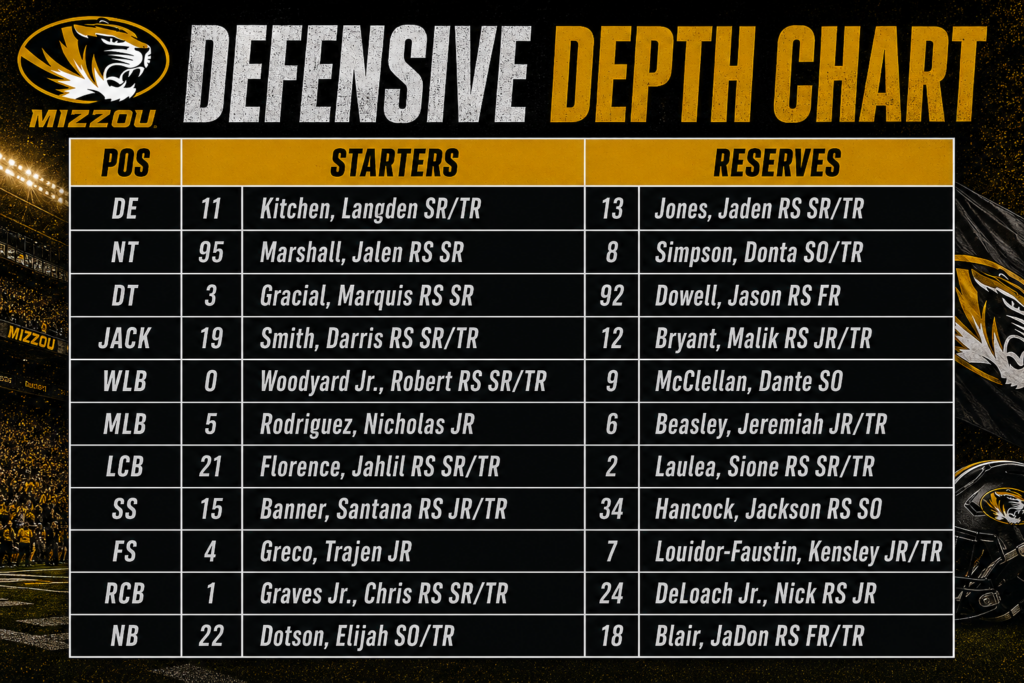
Missouri’s defense also enters a transition period after losing several important contributors, but Corey Batoon remains in place as defensive coordinator. Eli Drinkwitz supplemented the roster heavily through the portal, particularly at linebacker and in the secondary.
One of the most important additions is former Auburn linebacker Robert Woodyard Jr., who has already earned preseason third-team All-SEC recognition from the league’s coaches. Michigan transfer Jeremiah Beasley joins him at linebacker, while former Miami defensive tackle Donta Simpson and Baylor edge Kamauryn Morgan add young talent to the front.
The secondary has also been rebuilt with experienced transfers, including Sione Laulea, Chris Graves Jr. and Nasir Pogue. That’s useful experience, but Missouri is asking a lot of newcomers to immediately become SEC-caliber starters.
I don’t expect this defense to collapse, particularly with Batoon’s continuity, but there are more unknowns than there were on some of Drinkwitz’s recent teams. Missouri has enough talent to be solid defensively; I’m less convinced it has enough proven difference-makers to consistently shut down the best offenses on its schedule.
Overview and Projection
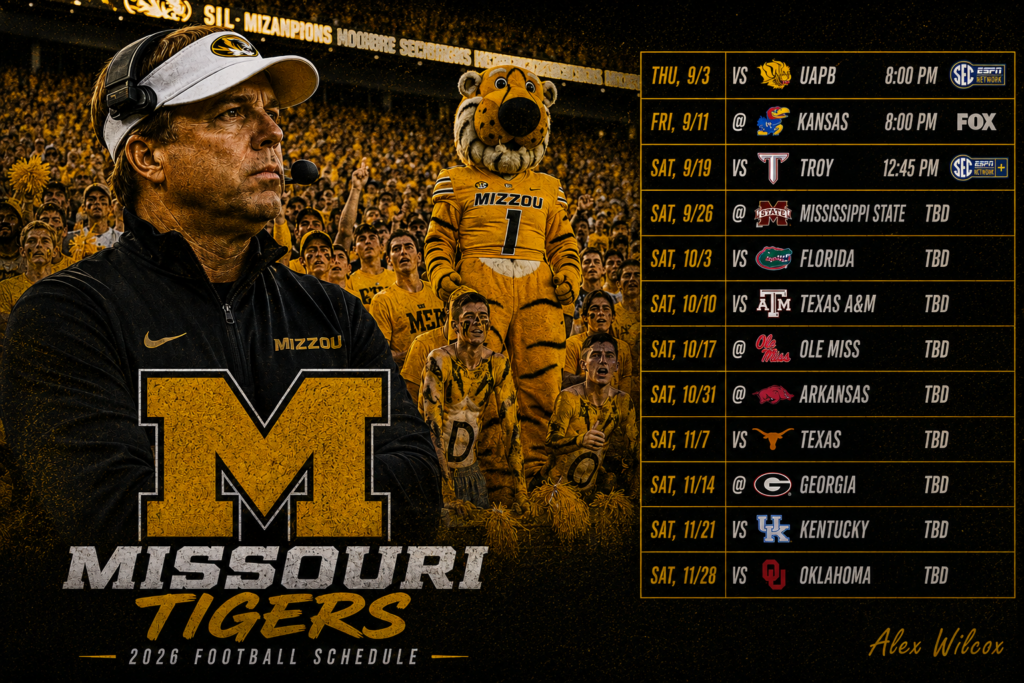
I have Missouri finishing 6–6 overall and 3–6 in the SEC. Hardy is good enough to win games almost by himself, and I think Simmons has boom or bust potential. But replacing the quarterback, leading receiver and multiple defensive contributors while navigating that back half makes another nine- or ten-win season difficult to envision.
There is upside here if Simmons develops faster than expected. Hardy gives Missouri one of the best offensive players in the SEC, and Drinkwitz is too good a coach for me to expect a major collapse. But compared with the teams I’ve placed above the Tigers, Missouri has more uncertainty at quarterback and fewer established stars across the roster. That leaves me at 6–6 in what I view as more of a transition season than a true step backward for the program.
Projected Record: 6-6 (3-6)
South Carolina Gamecocks
Offensive Outlook
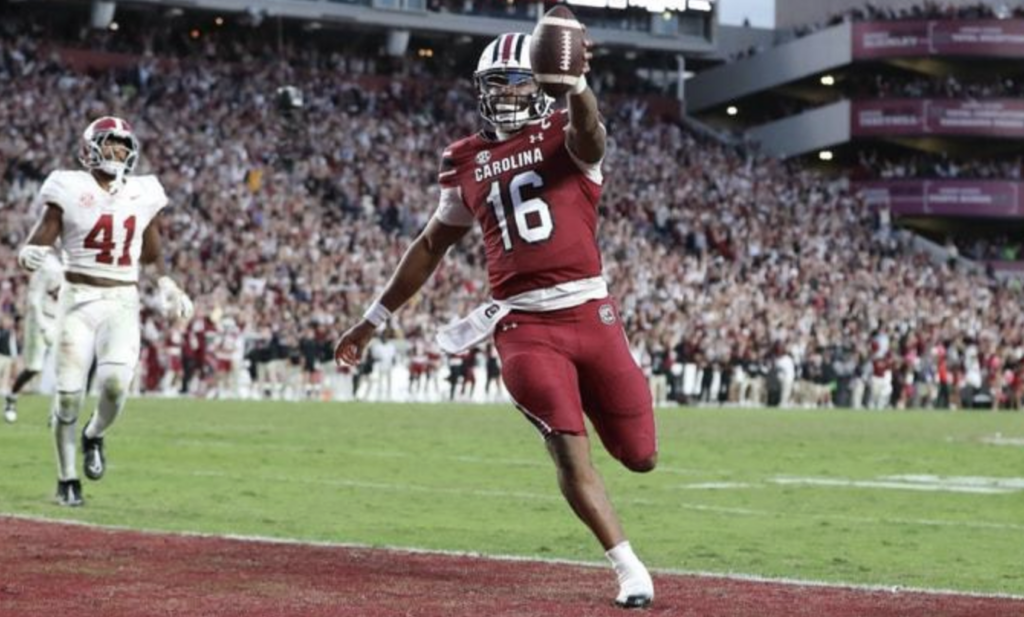
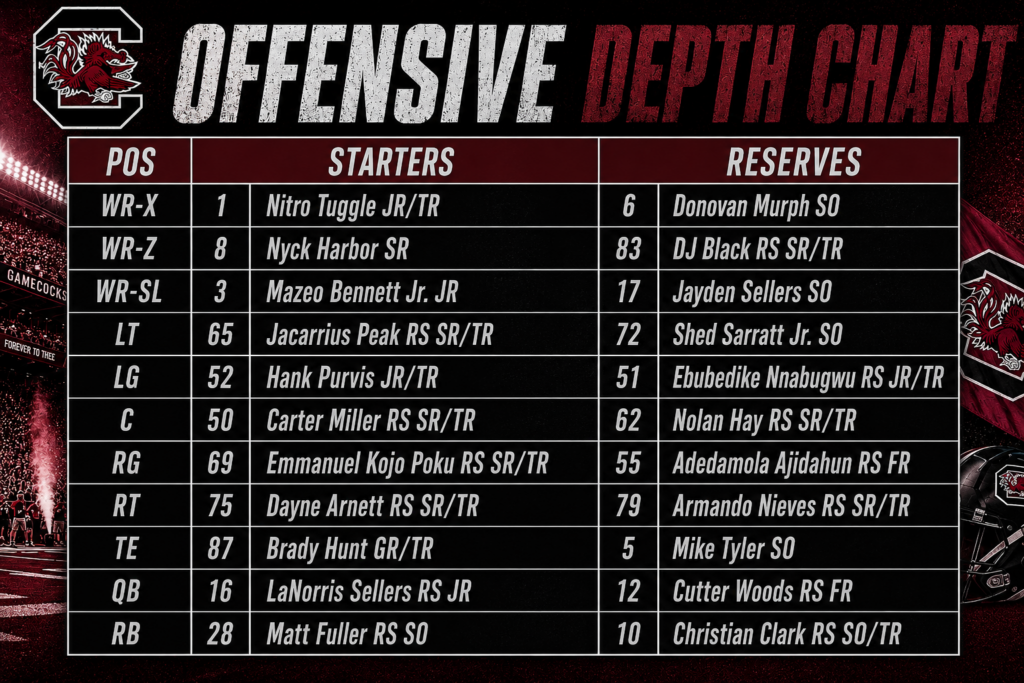
South Carolina enters 2026 trying to rediscover the offense that made the Gamecocks a preseason dark horse a year ago. Everything still revolves around LaNorris Sellers, who returns after throwing for 2,437 yards, 13 touchdowns and eight interceptions while adding 270 rushing yards and five scores in a disappointing 4–8 season.
The problem last season was everything around him. Sellers was sacked more than 40 times, and South Carolina’s offensive line finished 116th nationally in PFF grade. The Gamecocks responded by hiring former TCU coordinator Kendal Briles and aggressively rebuilding the line with transfers including NC State tackle Jacarrius Peak, Purdue guard Hank Purvis and UCF center Carter Miller. Peak is particularly important after posting an 84.1 PFF pass-blocking grade last season.
There are still weapons to work with. Isaiah Augustave returns in the backfield, while Nitro Tuggle and Sellers’ brother Jayden Sellers are among the receiving options. More importantly, South Carolina returns 76% of its offensive production, second-most in the FBS, giving Briles considerably more continuity than the 4–8 record might suggest.
I’m still a believer in Sellers. At 6-foot-3 and nearly 240 pounds, he has rare arm talent and rushing ability; PFF notes that his 88 forced missed tackles since the beginning of 2024 are the most among Power Four quarterbacks. If the rebuilt line gives him time, South Carolina’s offense could improve dramatically without Sellers needing to become a completely different player.
Defensive Outlook
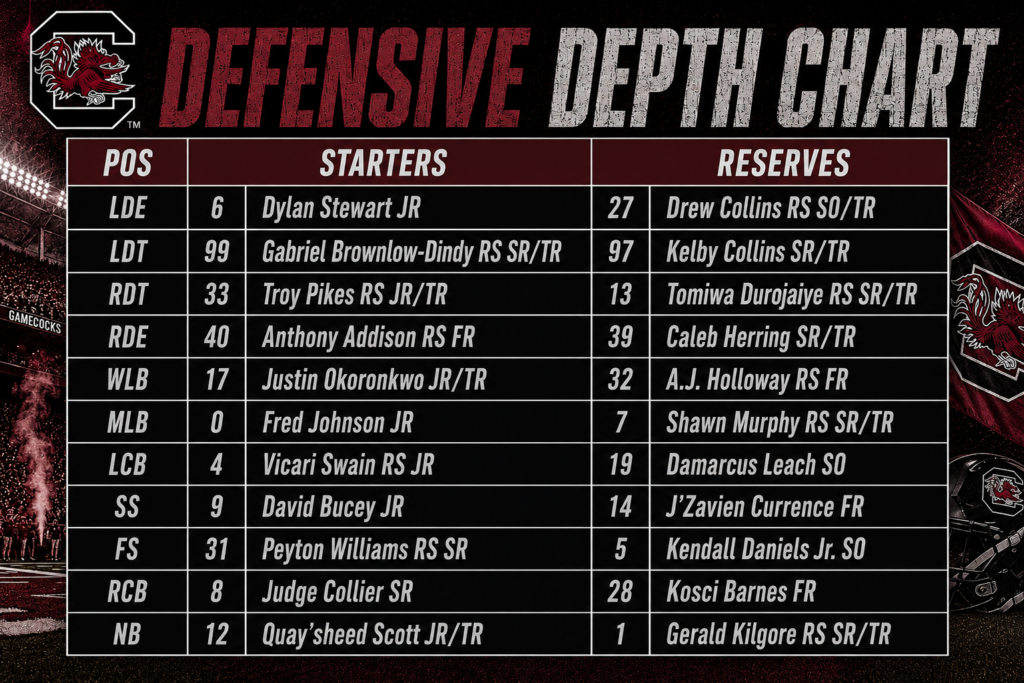
The defense is where I have considerably more confidence. South Carolina allowed 22.1 points and 353 yards per game last season despite the offense repeatedly struggling to sustain drives. The Gamecocks now enter 2026 with what PFF rates as the No. 9 defensive line in college football.
The centerpiece is stud Dylan Stewart, one of the most physically gifted edge defenders in the country. His pass-rushing production dipped while dealing with a back injury late last season, but he improved substantially against the run and enters 2026 as a potential top-end NFL Draft prospect. A healthy Stewart gives South Carolina the kind of defender opponents have to account for on every passing down.
The Gamecocks have also strengthened the interior with Gabriel Brownlow-Dindy and Illinois transfer Tomiwa Durojaiye. That should allow South Carolina to remain physical against the run while creating favorable opportunities for Stewart on the edge.
This defense may have to carry the team at times, particularly early while the rebuilt offensive line settles in. But an elite version of Stewart changes the complexion of the entire unit, and I expect South Carolina to field a defense capable of keeping the Gamecocks competitive against most of their schedule.
Overview and Projection
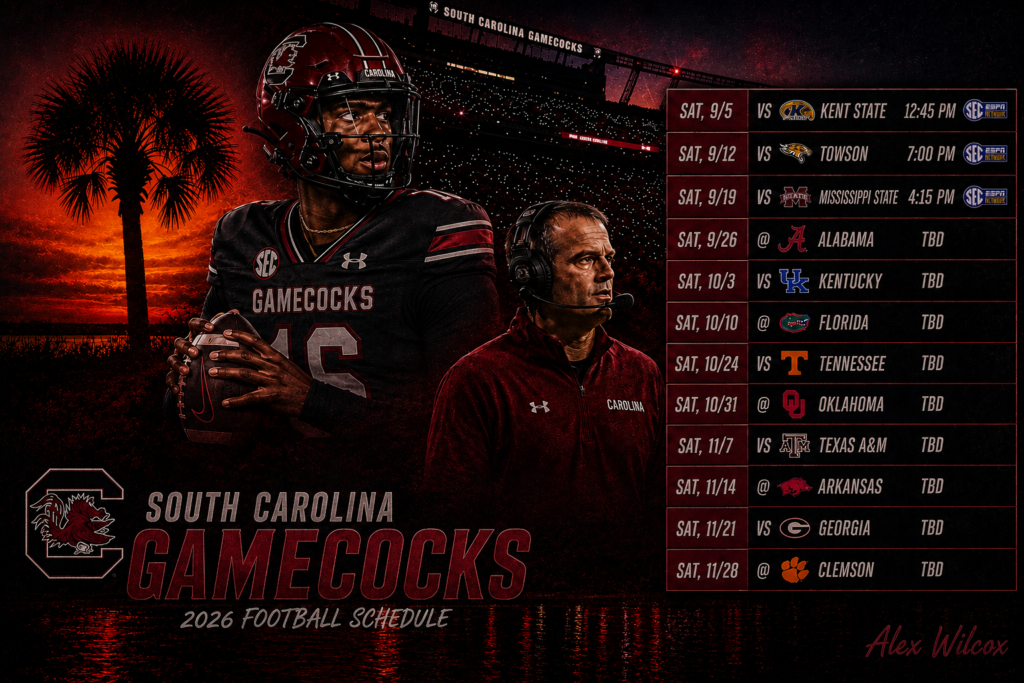
I have South Carolina finishing 6–6 overall and 3–6 in the SEC. Sellers gives the Gamecocks a higher ceiling than most teams projected in the bottom half of the league, and I expect Briles to improve an offense that scored only 22.7 points per game last season. But I’m not ready to assume one offseason completely fixes an offensive line that was such a significant problem.
South Carolina is one of my biggest wild cards in the SEC. If the protection improves and Sellers finally gets to play within a functional offense, the Gamecocks could easily exceed six wins. If the same protection problems return, the difficult back half of the schedule could produce another frustrating season. I’m betting on improvement—but 6–6 feels like the appropriate midpoint between Sellers’ enormous upside and the legitimate weaknesses surrounding him.
Projected Record: 6-6 (3-6)
Mississippi State Bulldogs
Offensive Outlook
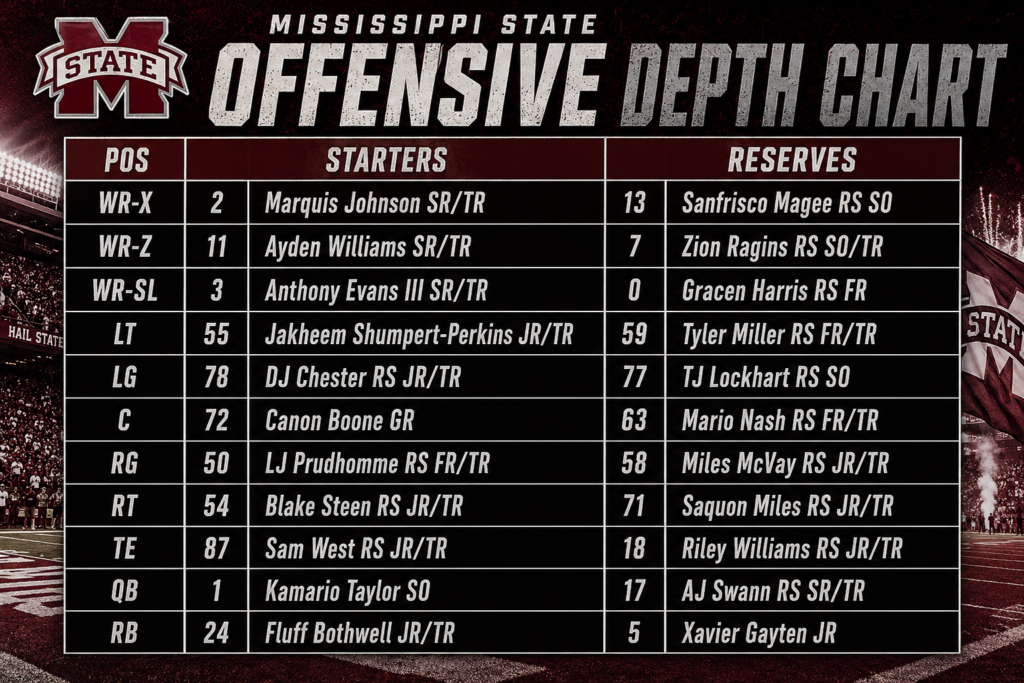
Mississippi State enters Year 3 under Jeff Lebby with considerably more offensive upside than its record might suggest, largely because of sophomore quarterback Kamario Taylor. Taylor flashed late in 2025, throwing for 629 yards, five touchdowns and only one interception while rushing for another 513 yards and eight touchdowns. He started the final two games and showed exactly why Mississippi State has been so excited about his development.
The backfield should make his transition to full-time starter easier. Former South Alabama transfer Fluff Bothwell rushed for 677 yards and six touchdowns despite battling injuries during the second half of last season. Before getting hurt at Texas A&M, he was averaging 5.8 yards per carry and ranked fourth in the SEC in both rushing yards and touchdowns. He’s now healthy entering 2026.
At receiver, Anthony Evans III returns with major expectations after playing behind record-setting Brenen Thompson last season. Evans has openly stated that his goal is to break Mississippi State’s single-season receiving record of 1,054 yards. The bigger concern is an offensive line undergoing significant reconstruction. Veteran Boone is the lone returning starter, and Lebby has spent camp experimenting with combinations around him.
Mississippi State averaged a respectable 30.4 points and 399.2 yards per game last season. With Taylor’s dual-threat ability and a healthy Bothwell, I think this offense could actually improve. The question isn’t whether State can score—it is whether the offensive line can hold up against the better defensive fronts on its SEC schedule.
Defensive Outlook
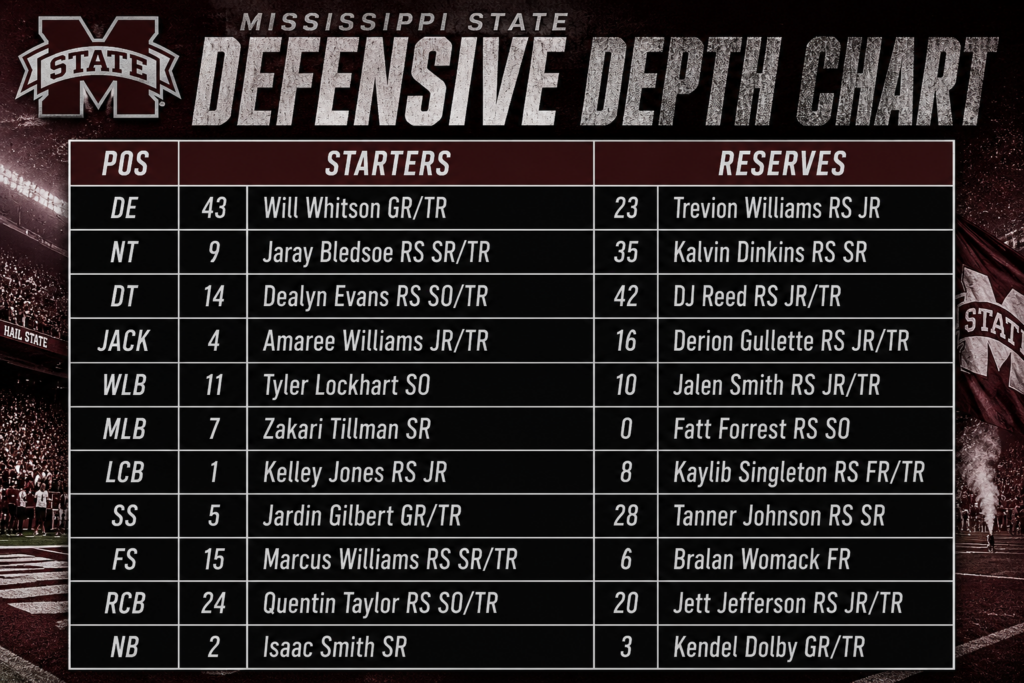
Defense remains the much bigger concern. Mississippi State surrendered 30.2 points and 409.3 yards per game last season, including 186.3 rushing yards per game and 4.9 yards per carry. Those numbers make it extremely difficult to consistently win SEC games, regardless of how productive Lebby’s offense becomes.
There were some positives. State intercepted 13 passes and recorded 45 sacks, showing that the defense could create disruptive plays even while struggling with consistency. The focus for 2026 has been building greater depth across the defensive line, linebacker and secondary, something Lebby has repeatedly emphasized during preseason camp.
The Bulldogs don’t need this unit to suddenly become one of the SEC’s best. They simply need to become more dependable against the run and reduce the number of explosive drives surrendered. With Taylor and Bothwell potentially creating a better offense, even a moderate defensive improvement could change the outcome of some of the close games State lost last season.
That’s the key to Mississippi State’s season. The offense has enough playmakers to compete; the defense has to give it a chance. Until I see substantial improvement against SEC rushing attacks, it’s difficult for me to project a major jump in the standings.
Overview and Projection
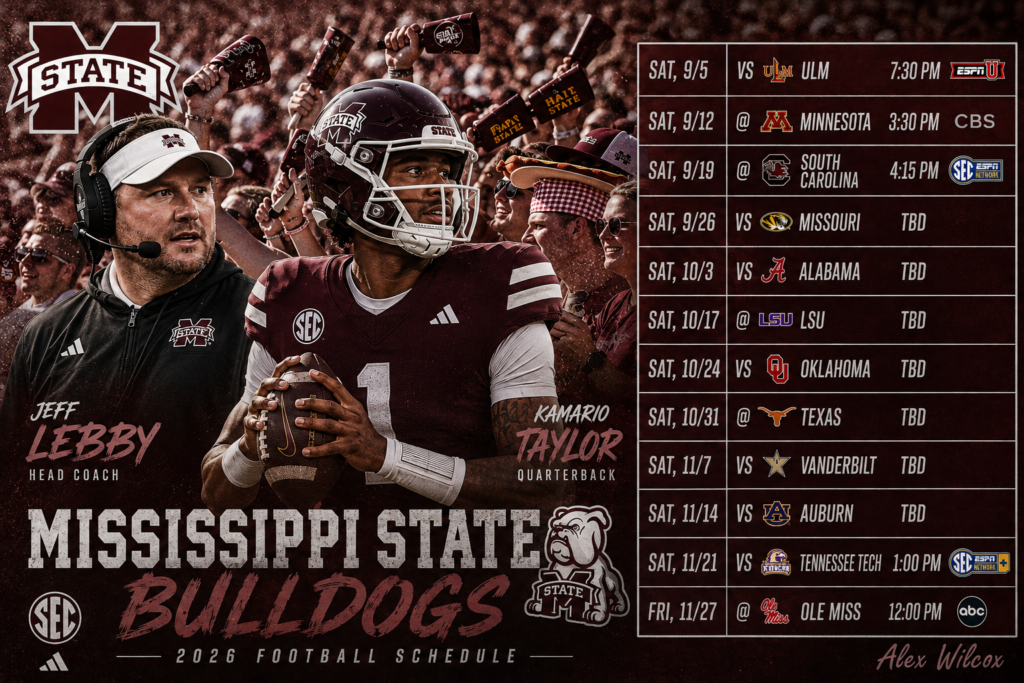
I have Mississippi State finishing 4–8 overall and 2–7 in the SEC. That may look like regression after last year’s five wins, but I don’t necessarily think the team itself will be worse. Taylor could become one of the SEC’s breakout quarterbacks, Bothwell is dangerous when healthy, and Lebby’s offense should keep State competitive in games where the talent gap isn’t overwhelming.
The swing games are obvious: Minnesota, South Carolina, Missouri, Vanderbilt and Auburn. State needs to win multiple games from that group to exceed my projection. I’m not ready to predict that yet, particularly given the defensive questions, but the Bulldogs are dangerous enough to ruin somebody else’s season. A 4–8 record wouldn’t fully capture the progress being made in Starkville, and Kamario Taylor is the biggest reason I think Mississippi State’s long-term trajectory remains pointed upward.
Projected Record: 4-8 (2-7)
Kentucky Wildcats
Offensive Outlook
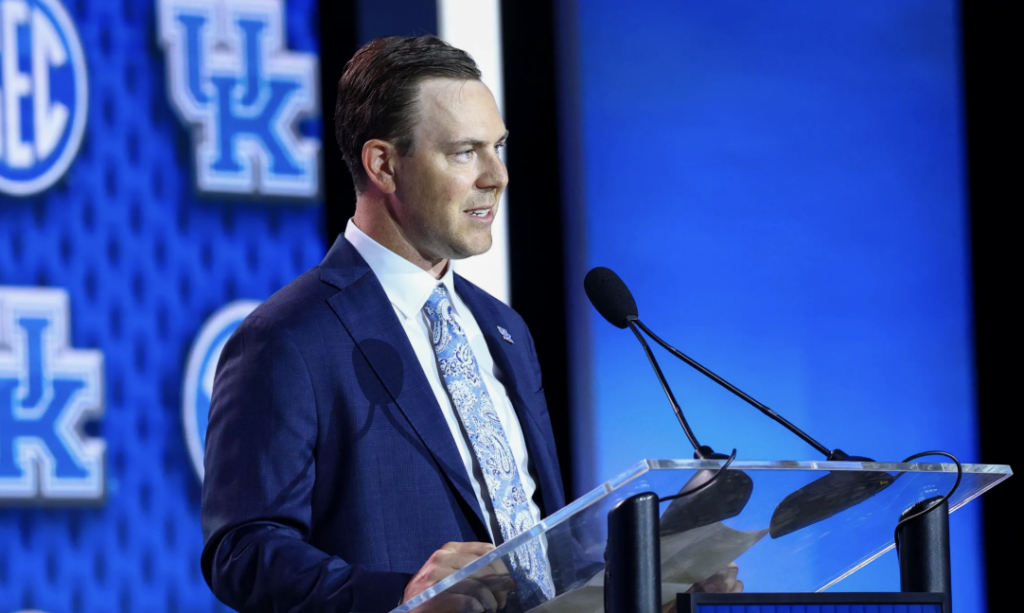
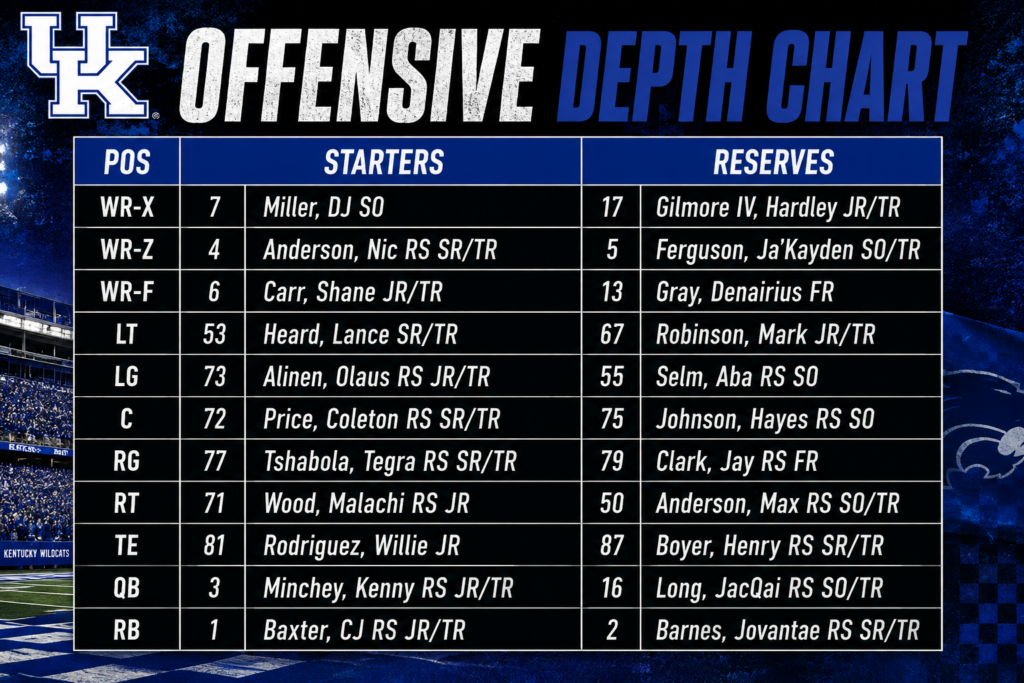
Kentucky begins a completely new era in 2026 with Will Stein replacing Mark Stoops after 13 seasons. Stein arrives after coordinating one of college football’s most efficient offenses at Oregon, and fixing Kentucky’s offense is clearly the first priority. The Wildcats finished near the bottom of the SEC in total offense again in 2025, continuing a multi-year decline on that side of the ball. Stein responded with a massive roster overhaul that included 31 transfer additions and 13 projected starters from the portal.
The new quarterback is Kenny Minchey, a Notre Dame transfer who will make his first collegiate start this season. Minchey has only 32 career dropbacks, so there is considerable projection involved, but his skill set makes sense for Stein’s system. He’s athletic enough to extend plays, has sufficient arm talent to attack vertically and spent three years developing at Notre Dame.
Kentucky also rebuilt the supporting cast. Former Texas running back CJ Baxter and Oklahoma transfer Jovantae Barnes give Stein two talented options in the backfield, although durability has been an issue for both. Tight end Willie Rodriguez is one of the best returning weapons after catching 23 passes for 310 yards last season. The offensive line could actually become the strength of the unit. Tennessee transfer Lance Heard has 24 career starts and has surrendered only three sacks across 1,780 snaps, while Baylor transfer Coleton Price started 30 games at center and allowed only one sack on 526 pass-blocking snaps last season.
I expect Kentucky’s offense to look noticeably different immediately. Stein’s track record makes me confident the scheme will improve, but scheme and talent aren’t the same thing. Minchey is inexperienced, the skill group has questions and much of the offensive line is new. The long-term offensive trajectory is encouraging; I’m less convinced everything comes together quickly enough in Year 1.
Defensive Outlook
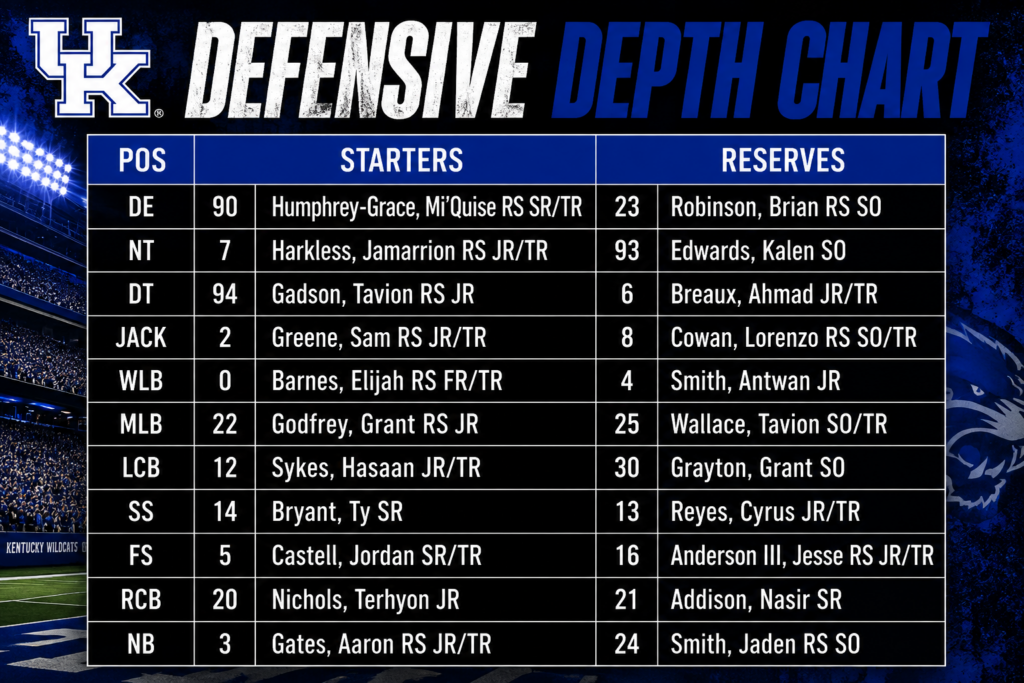
Kentucky’s defense gives Stein a much more established foundation. New defensive coordinator Jay Bateman is installing an aggressive, multiple system designed to get Kentucky playing faster and attacking upfield. The defensive front in particular has drawn praise throughout fall camp and should be one of the team’s better position groups.
Tavion Gadson is the player I’m watching most closely up front. PFF enters the season with Gadson rated as its No. 10 interior defensive lineman nationally, and Kentucky returns three projected starters along the defensive line. Jamarrion Harkless provides size inside, while players such as Mi’Quise Humphrey-Grace and Jaden Williams should benefit from Bateman’s more aggressive approach.
The best proven player in the secondary is Ty Bryant. He led Kentucky with 76 tackles and four interceptions in 2025, with those four picks also leading the SEC. Florida transfer Jordan Castell adds another experienced defensive back to a unit that needed reinforcements.
I actually like Kentucky’s defensive personnel more than its overall projection might indicate. There are legitimate SEC players in the front and Bryant gives Bateman a proven playmaker on the back end. The concern is whether the defense can consistently compensate for an offense going through such a significant transition. If Kentucky’s offense struggles to sustain drives early, this unit could once again be asked to carry too much of the workload.
Overview and Projection
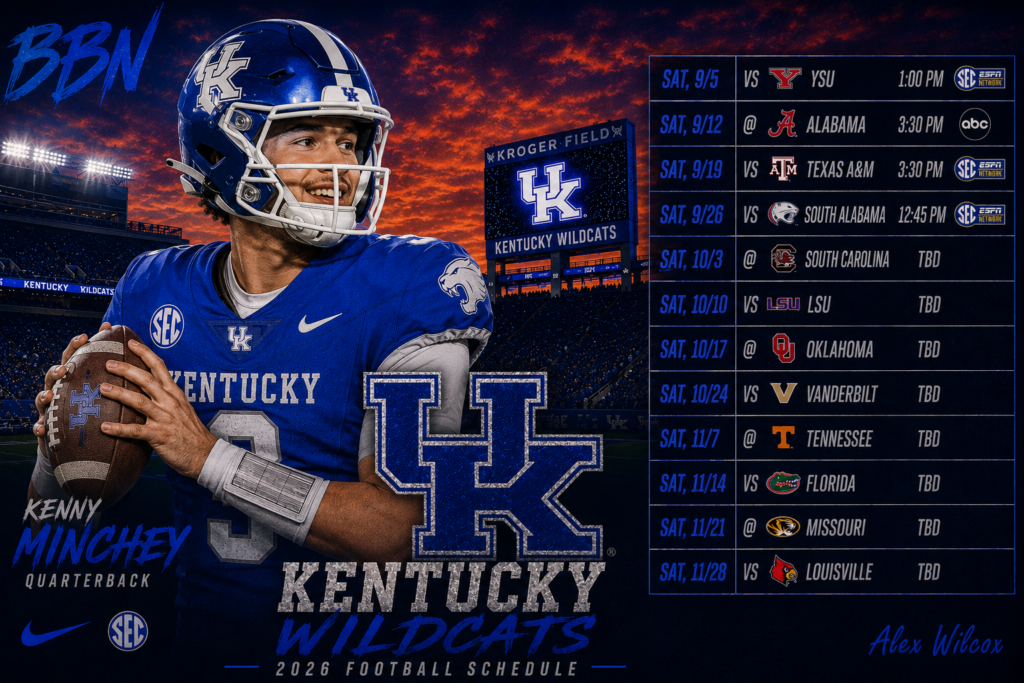
I have the Wildcats finishing 3–9 overall and 1–8 in the SEC. Youngstown State and South Alabama are the two games Kentucky absolutely should win. After that, almost everything becomes a fight. South Carolina, Vanderbilt, Florida, Missouri and Louisville represent the games where Kentucky has its best opportunities to outperform my projection, but I’m expecting only one SEC victory from that group.
This is another case where I don’t think the final record will necessarily tell the entire story. Kentucky could be better coached offensively and more competitive overall while still finishing with fewer wins because of the schedule and the sheer amount of roster turnover. Minchey’s development is the biggest variable. If Stein unlocks him immediately and the rebuilt offensive line performs as well as its individual pieces suggest, Kentucky could push toward five or six wins. But entering Year 1 with an inexperienced quarterback and nine SEC games, 3–9 feels like the more realistic floor-setting season before Stein has an opportunity to fully reshape the program.
Projected Record: 3-9 (1-8)
Vanderbilt Commodores
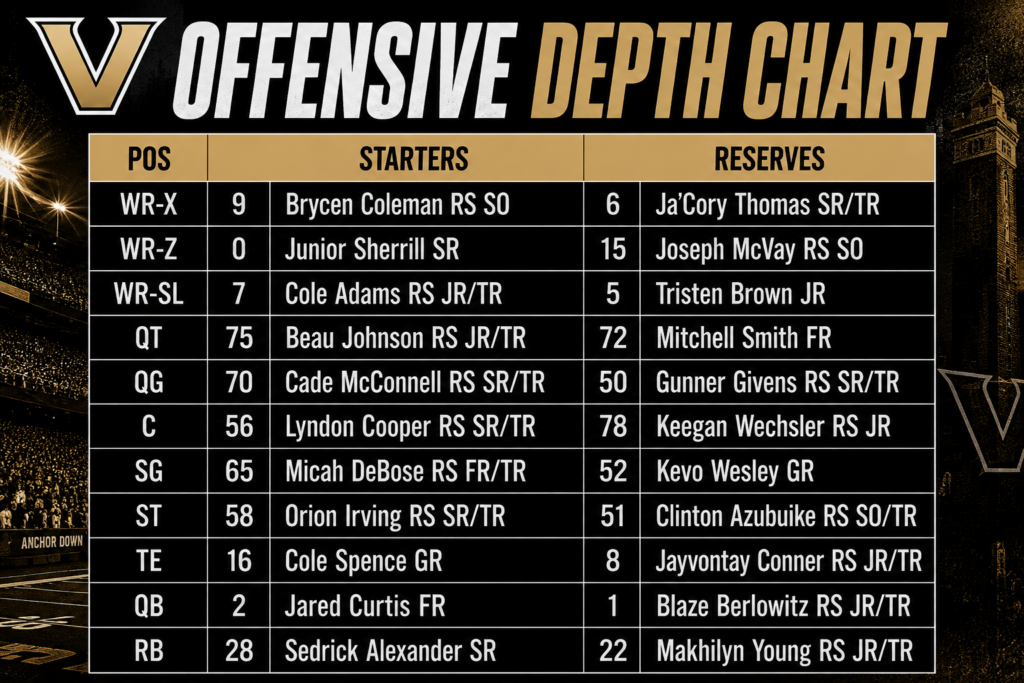
Offensive Outlook
Vanderbilt enters 2026 facing one of the most difficult quarterback transitions in the SEC. Diego Pavia is gone after producing one of the greatest seasons in school history, throwing for 3,192 yards and 27 touchdowns while rushing for 826 yards and nine more scores during the 2025 regular season. Vanderbilt averaged 39.4 points per game and led the nation in yards per play with Pavia directing the offense. Replacing that combination of production, toughness and improvisational ability is an enormous challenge.
The future of the position is five-star freshman Jared Curtis, the highest-profile quarterback recruit Vanderbilt has signed in the modern era. Curtis was rated the No. 1 quarterback in his class by 247Sports, On3 and ESPN after throwing for 2,830 yards, 40 touchdowns and only three interceptions as a high-school senior while adding 18 rushing touchdowns.
Fortunately, Vanderbilt retains some excellent pieces around its new quarterback. Junior Sherrill returns after catching 54 passes for 784 yards and seven touchdowns in 2025 and enters the season on the Biletnikoff Award watch list. Sedrick Alexander also returns after rushing for 567 yards and 11 touchdowns while catching 19 passes for another 200 yards and four scores. He was particularly impressive in Vanderbilt’s win at Tennessee, rushing for 115 yards and three touchdowns.
There is enough returning talent for this offense to remain competitive, but expecting anything close to the Pavia-led 2025 production is unrealistic. Curtis has the physical tools to eventually become an outstanding SEC quarterback, yet Vanderbilt is going from one of the country’s most experienced and productive quarterbacks to one of its least experienced. That’s the single biggest reason I’m projecting such a significant decline in record.
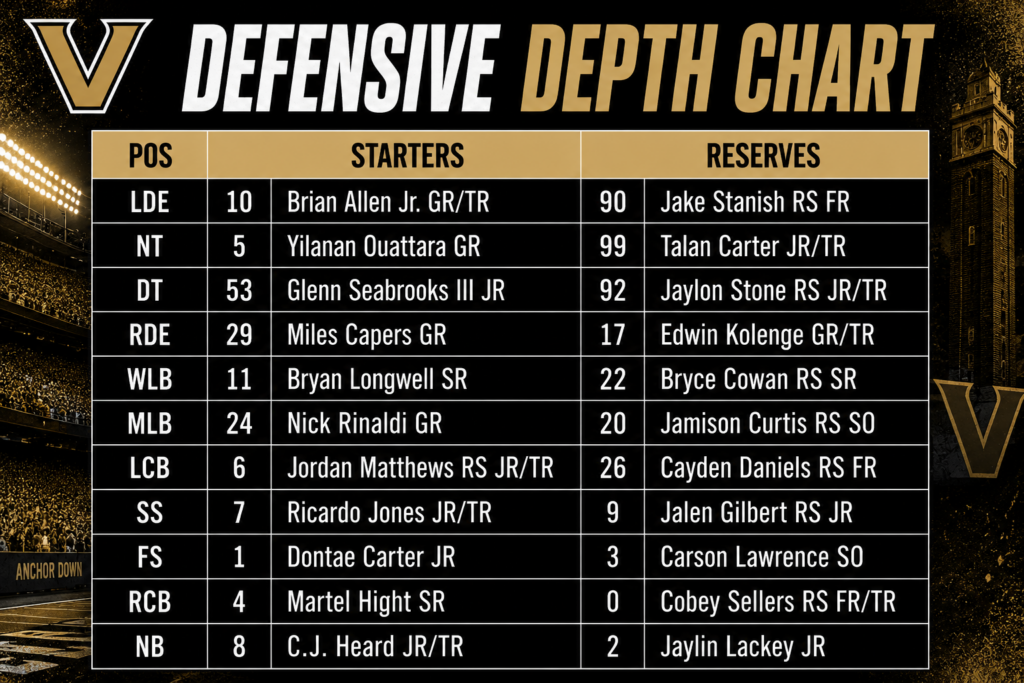
Defensive Outlook
Defensively, Vanderbilt should have more continuity. Clark Lea has gradually transformed the physical profile of this program, and last season was the clearest evidence yet that Vanderbilt could hold up against legitimate SEC competition. The Commodores finished 10–3 overall and won a school-record six SEC games, including victories over LSU, South Carolina, Auburn, Kentucky and Tennessee.
The defensive front should remain a strength. Yilanan Ouattara returns after an injury limited him for much of 2025. In 2024, he played all 13 games and recorded 31 tackles with five tackles for loss, and Vanderbilt selected him as one of its three representatives at SEC Media Days this summer. Miles Capers is another veteran piece up front, while CJ Heard provides experience on the back end; both joined Ouattara on the Senior Bowl watch list.
Vanderbilt was disruptive last season even when it wasn’t dominant statistically. The Commodores finished with 82 tackles for loss and 31 sacks, numbers that illustrate how aggressive this defense became under Lea’s direction. Maintaining that disruption will be important because the offense probably won’t give the defense the same margin for error it enjoyed during stretches of 2025.
I trust Vanderbilt’s defense more than I trust its offense entering the season. Lea has established a clear identity, the roster is more talented than it was early in his tenure, and Vanderbilt no longer looks physically overwhelmed against SEC opponents. The question is whether the defense can keep games close enough while Curtis and the new-look offense develop.
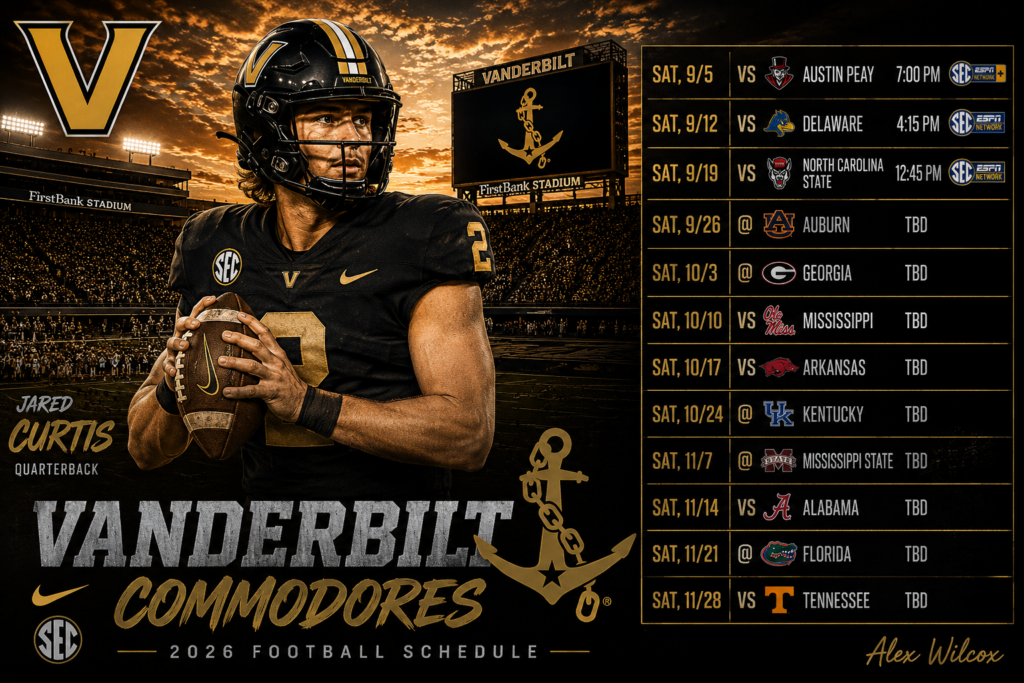
Overview and Projection
I have Vanderbilt finishing 4–8 overall and 1–8 in the SEC. The obvious opportunities for that conference victory come against Arkansas, Kentucky or Mississippi State, while Auburn is another game where I wouldn’t dismiss Vanderbilt’s chances. The problem is that the upper portion of the schedule offers almost no margin for error.
I also think Vanderbilt could be better than a typical 4–8 SEC team. Lea has built a legitimate program rather than simply producing one fluke season, and Curtis gives Vanderbilt considerably more long-term quarterback upside than the program has historically had. But Pavia was the perfect veteran quarterback for what Vanderbilt wanted to do, and replacing him immediately with a true freshman is asking a lot. 2026 looks like a reset year in terms of wins, not a return to the old Vanderbilt. If Curtis develops as expected, the Commodores could be positioned to become dangerous again very quickly.
Projected Record: 4-8 (1-8)
Arkansas Razorbacks
Offensive Outlook
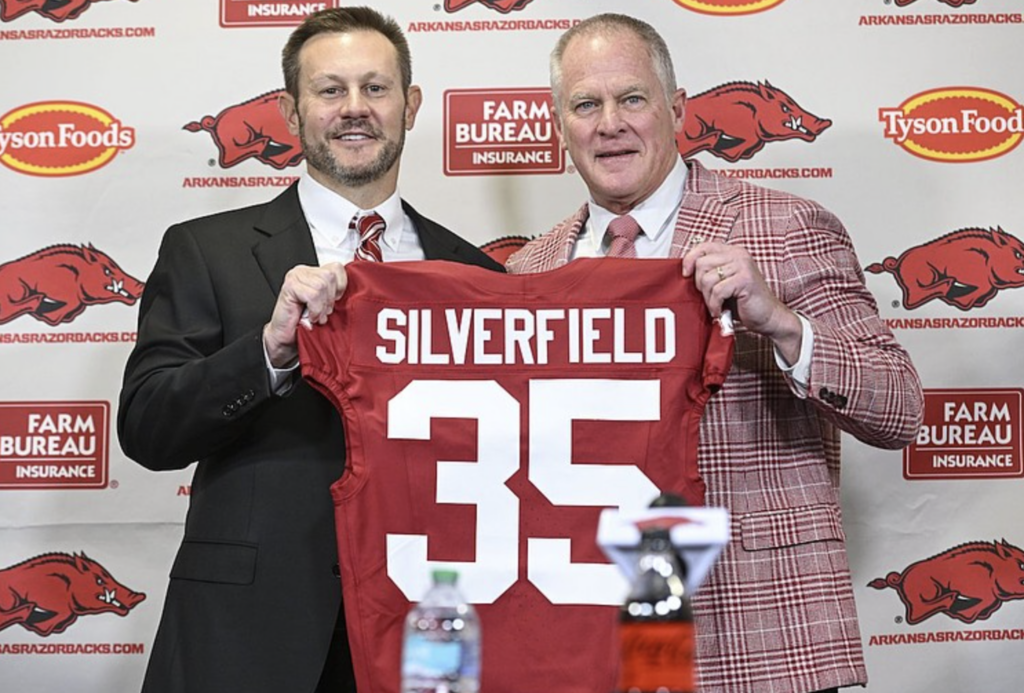
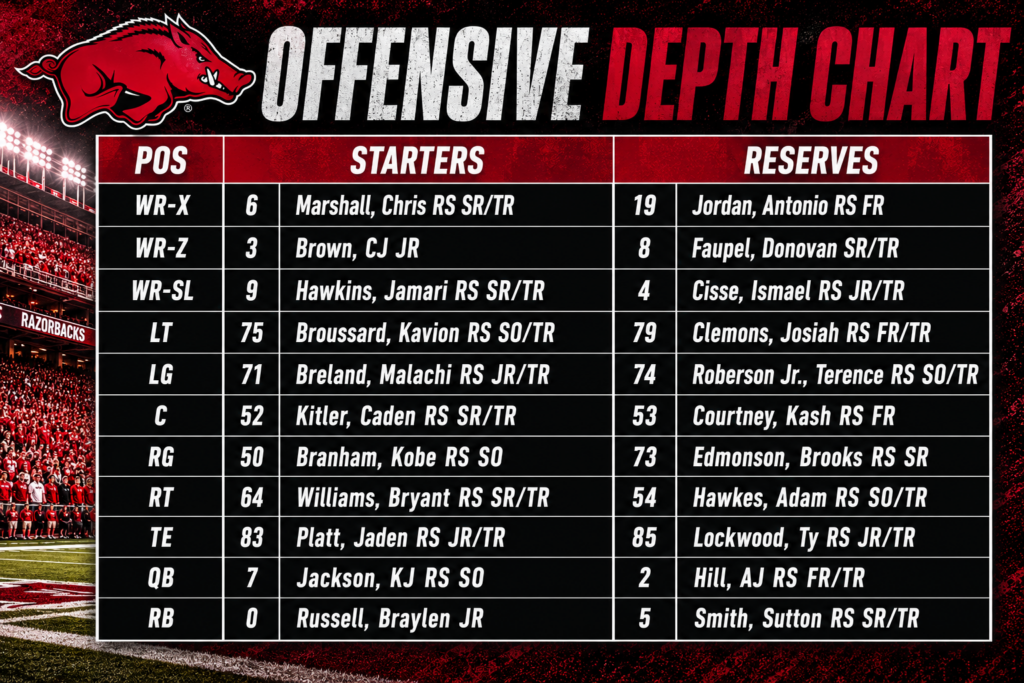
Arkansas begins 2026 with almost everything changing at once. Ryan Silverfield takes over for Sam Pittman after Arkansas bottomed out at 2–10 and 0–8 in SEC play last season. Silverfield arrives from Memphis after going 29–9 over his final three seasons there, and he brought offensive coordinator Tim Cramsey with him. The staff attacked the portal aggressively, adding an SEC-high 42 transfers in an attempt to accelerate what otherwise could have been a multi-year rebuild.
At quarterback, KJ Jackson has officially won the starting job after competing with Memphis transfer AJ Hill throughout spring and fall camp. Jackson actually provided one of the few encouraging signs late last season, completing 33 of 54 passes for 441 yards, three touchdowns and no interceptions, while rushing for 52 yards and two more scores. He started the regular-season finale against Missouri and now gets his first opportunity to run a team for an entire season.
The running game is where I see considerably more promise. Braylen Russell has averaged better than five yards per carry during his Arkansas career, while Memphis transfer Sutton Smith joins him after rushing for 675 yards last season. Silverfield’s Memphis teams finished inside the top 15 nationally in EPA per rush in each of the past two seasons, so I expect Arkansas to make the ground game the foundation of its offense. Tight end Jaden Platt also returns after catching 21 passes for 296 yards and two touchdowns in 2025.
There are intriguing portal receivers, including Boise State transfer Chris Marshall and Memphis transfer Jamari Hawkins, but this is still a largely reconstructed offense. I think Silverfield and Cramsey can establish a respectable rushing attack, and Jackson’s mobility fits what they want to do. The problem is that Arkansas doesn’t have an established high-end quarterback or enough proven SEC skill talent for me to trust this offense when opponents force Jackson to win games through the air.
Defensive Outlook
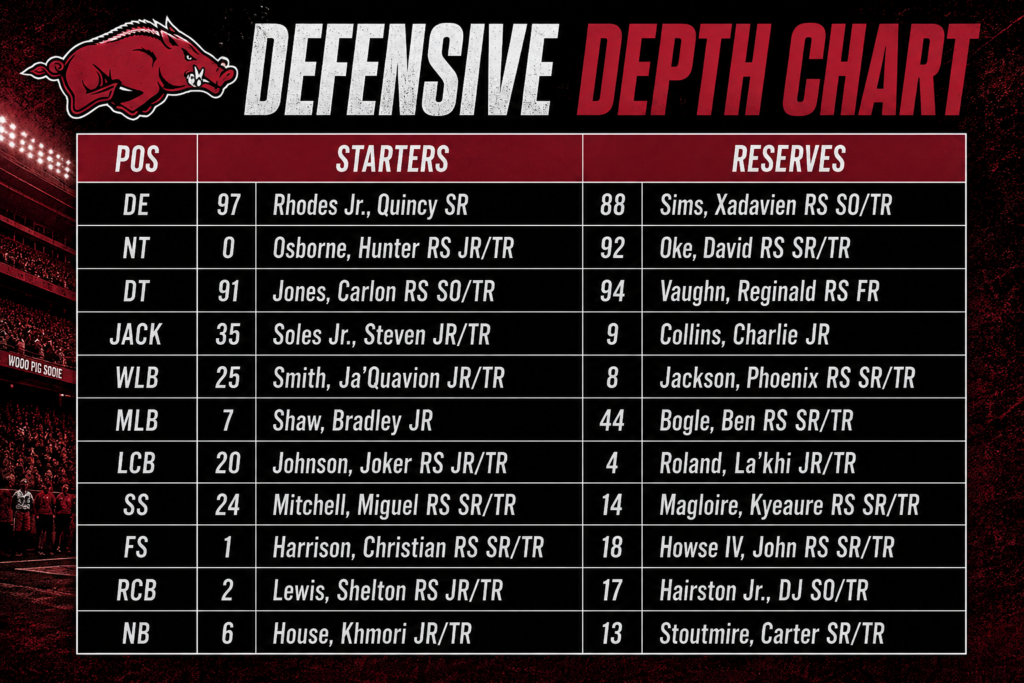
The defense is the primary reason Arkansas sits at the bottom of my SEC projections. Last year’s unit was disastrous, surrendering nearly 34 points per game and finishing eighth-worst nationally in defensive EPA per play. The secondary was particularly problematic, ranking 126th nationally in PFF coverage grade.
There is at least one legitimate building block in Quincy Rhodes Jr. He broke out in 2025 with 44 tackles, 15.5 tackles for loss and eight sacks, leading Arkansas in tackles for loss while adding six quarterback hurries and a forced fumble. His 15.5 TFL were the most by a Razorback since Trey Flowers in 2015. If Arkansas is going to make a significant defensive jump, Rhodes needs to become one of the better defensive linemen in the conference.
Around him, however, Silverfield essentially had to rebuild the defense through the portal. The secondary lost seven of the eight players who logged at least 150 snaps last season. Transfers Joker Johnson from Tulane, La’khi Roland from Maryland, Carter Stoutmire from Colorado and Christian Harrison from Cincinnati are among the players being asked to immediately stabilize the back end.
There’s an argument that so much turnover could actually help because the baseline was so poor. I agree to an extent. Arkansas doesn’t need the transfers to replace a good defense—it needs them to replace one of the worst defenses in the Power Four. I expect improvement, but building communication and chemistry with this many newcomers is difficult, and Arkansas will face several of the SEC’s most talented offenses.
Overview and Projection
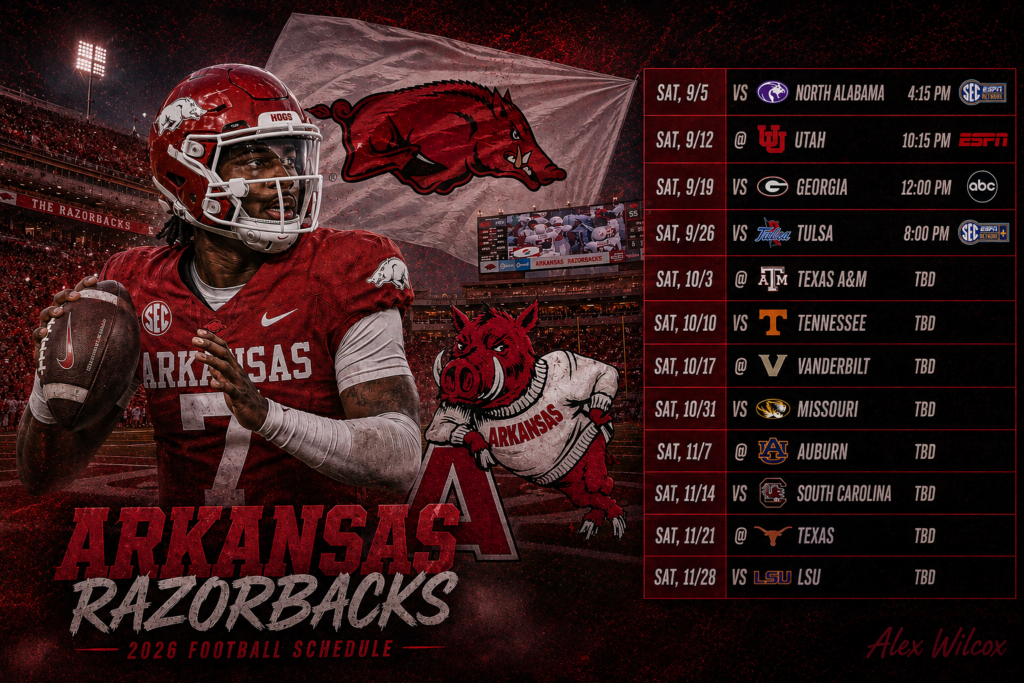
I have Arkansas beating North Alabama and Tulsa and finishing 2–10 overall and 0–9 in the SEC. The best opportunities to prove me wrong come against Vanderbilt, Missouri, Auburn and South Carolina, but three of those four games are away from Fayetteville. Arkansas could be improved from last year’s team without the record showing it.
There are pieces I like. Rhodes is a legitimate difference-maker, the running back room has potential, and Jackson showed enough late last season to make him interesting. But this is the most extensive rebuild in the conference, with a first-year SEC head coach, an inexperienced quarterback and a defense trying to replace almost everything after being one of the SEC’s worst units.